Glen
Glen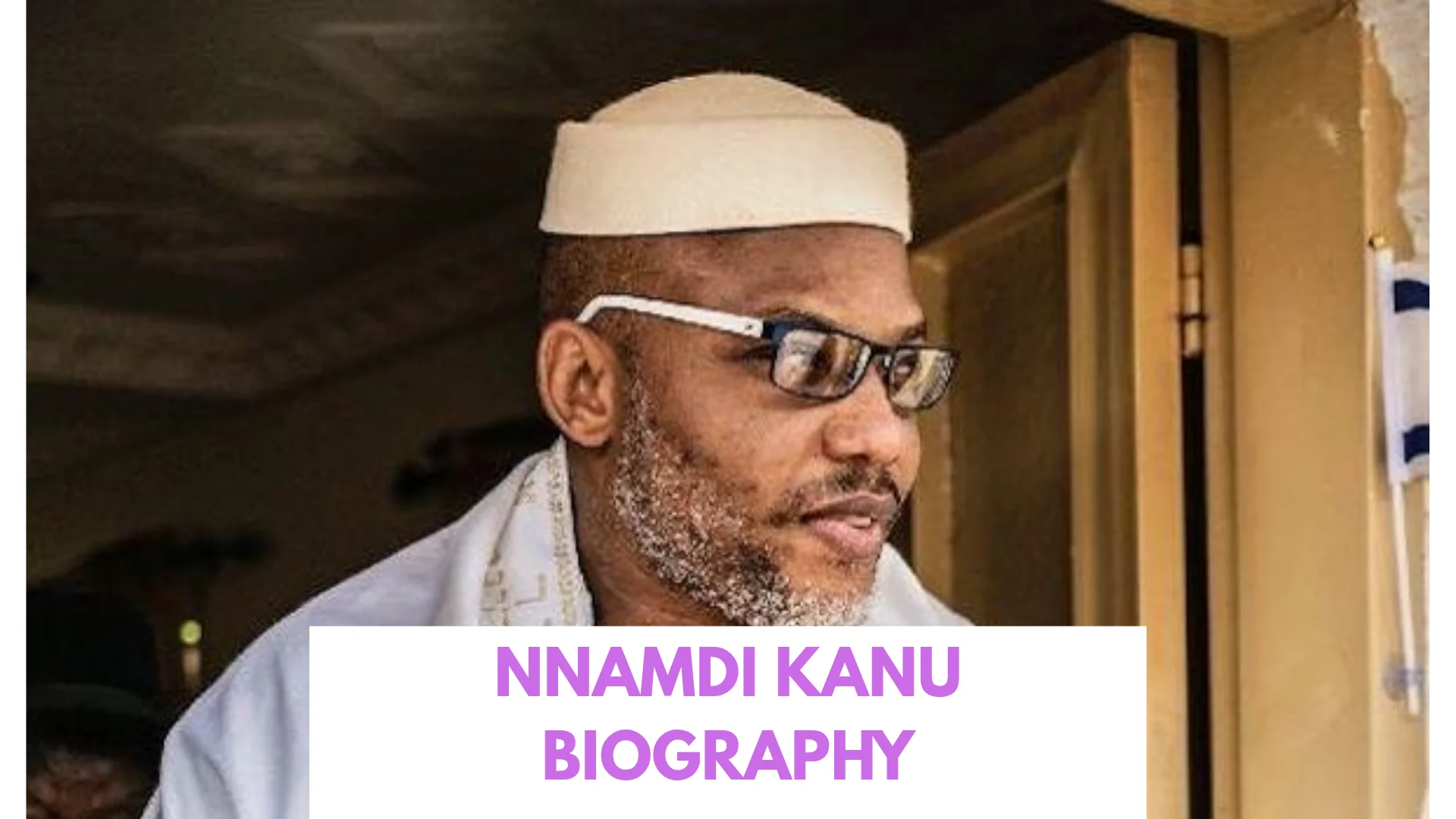
Nnamdi Okwu Kanu is one of the most polarizing figures in modern Nigerian politics. Best known as the leader of the Indigenous People of Biafra (IPOB) and the voice behind Radio Biafra, Kanu’s activism has shaped contemporary debates about self-determination in southeastern Nigeria and attracted both fierce support and strong state opposition. This biography traces his early life, activism, legal battles, and the major events that have defined his public life.
Data
- Full Name: Nwannekaenyi Nnamdi Okwu Kanu
- Born: 25 September 1967
- Age: ~58 years (as of 2025)
- Birthplace: Isiama Afara-Ukwu, Umuahia, Abia State, Nigeria
- State of Origin: Abia State, Nigeria
- Nationality: British-Nigerian
- Occupation: Activist, Political Economist, Separatist Leader
- Religion: Judaism (he has publicly said he identifies as a Jew)
- Parents: Father: Eze Israel Okwu Kanu; Mother: Ugoeze Nnenne Kanu
- Siblings: According to some sources, siblings include Prince Emmanuel Kanu and Princess Chinwe Kanu.
- Spouse: Uchechi Okwu Kanu
- Children: He has at least one child, named Nnabuikem Nnamdi Okwu Kanu.
- Net Worth: Reported to be around US$70 million by some outlets.
Early life and background
Nnamdi Kanu was born on 25 September 1967 in Isiama Afara (Umuahia), a town in the area that declared itself the Republic of Biafra during the Nigerian civil war. His birth in 1967 placed him into a historical narrative tied to the Biafran secessionist movement — a motif that would later shape his activism. He studied in Nigeria (attending Government College Umuahia and later the University of Nigeria, Nsukka) before relocating to the United Kingdom, where he would later base much of his broadcasting work.
From Radio Biafra to IPOB
Kanu first gained notice as the director and on-air personality of Radio Biafra, a London-registered station that broadcast pro-Biafra messages and critique of the Nigerian state. In 2012–2014 he formally founded and organized supporters under the banner of the Indigenous People of Biafra (IPOB), an umbrella movement calling for the independence of Biafra — predominantly championed by many Igbo people of southeastern Nigeria. His radio program and social-media outreach helped IPOB grow rapidly, becoming a key platform for mobilization and information.
Beliefs and public image
Kanu’s public profile is shaped by passionate speeches, religious symbolism (he has publicly said he identifies with Judaism), and a confrontational rhetoric toward the Nigerian government. Supporters hail him as a freedom fighter seeking justice for what they see as marginalization of the Igbo; critics accuse him of incitement and fostering unrest. Regardless of the viewpoint, his ability to command a devoted, highly organized following has been a defining feature of his life in politics.
Arrests, disappearance and extradition
Kanu’s legal battles have been long and complex. He was first arrested by Nigerian authorities in October 2015 on charges that included treasonable felony. After months of detention and a high-profile release on bail in 2017, Kanu disappeared while on bail and resurfaced outside Nigeria. In June 2021 he was reported arrested in Kenya and returned to Nigeria under controversial circumstances; the circumstances of his rendition and detention triggered international attention, legal debates, and statements from rights groups. The trials and recaptures have been repeatedly delayed by jurisdictional and procedural issues.
Charges, trial and verdicts
Over recent years, Kanu faced terrorism and treason charges in Nigeria. Trials have been marked by contentious courtroom moments, multiple judicial recusals, and headline-grabbing exchanges between the defendant and the bench. In 2025 major developments saw Kanu tried and — according to multiple news reports — convicted on at least one terrorism count and later sentenced. These rulings have intensified debate across Nigeria and abroad about the balance between national security, freedom of speech, and the rights of political dissidents.
International attention and human-rights concerns
Kanu’s arrest, alleged rendition, detention conditions, and the conduct of his trial attracted scrutiny from international human-rights organizations and civil-society groups. Calls for compliance with international norms and court rulings emerged, with some groups urging the Nigerian government to respect court decisions and due process. The case has thus become not only a national security matter for Nigeria but also a subject of international legal and human-rights discussion.
Supporters, methods and controversies
IPOB’s methods have included mass mobilization campaigns, social-media activism, and organized “sit-at-home” protests in parts of southeastern Nigeria. Critics argue that elements within the movement, or splinter groups, have been involved in violent enforcement of such orders, while IPOB’s core leadership insists on pursuing self-determination largely through non-violent means. The Nigerian government in 2017 proscribed IPOB as a terrorist organization — a decision that remains central to how the state prosecutes its leaders and affiliates.
Personal life
Kanu is married and has family ties in the UK where he spent much of his adult life. He also has a public persona that mixes activism with religious and cultural symbolism, which critics and supporters alike point to when interpreting his motives and strategy. Publicly available biographical profiles list his parents and early education, though details about private family life are often kept out of the spotlight for safety and privacy reasons.
Legacy and the future
Whether viewed as a separatist agitator or a champion of a marginalized people, Nnamdi Kanu occupies a significant place in Nigeria’s recent history. His activism has re-energized conversations about ethnic identity, resource control, and the political inclusion of the Igbo within Nigeria. The legal outcomes of his trials, the ongoing activities of IPOB and related movements, and the broader national response will shape his legacy for years to come. International legal scrutiny and domestic political responses will also determine how his case is remembered — as an example of justice being served, or as one of state overreach.
Frequently Asked Questions (FAQs)
Who is Nnamdi Kanu?
Nnamdi Kanu is a British-Nigerian activist and leader of the Indigenous People of Biafra (IPOB), best known for founding Radio Biafra and campaigning for Biafran independence.
When was he first arrested?
He was first arrested in October 2015 on treason-related charges and detained for an extended period before being granted bail in 2017.
Was he extradited to Nigeria?
Reports indicate he was arrested in Kenya in 2021 and returned to Nigeria in contentious circumstances that prompted legal and human-rights scrutiny.
What charges has he faced?
Kanu has faced charges including treason, incitement, and terrorism; some court proceedings in 2025 resulted in convictions and severe sentences reported by international media.
Is IPOB considered a terrorist group?
The Nigerian government proscribed IPOB as a terrorist organization in 2017; that designation has played a central role in prosecutions against its leaders and affiliates.
Conclusion
Nnamdi Kanu’s life and activism are inseparable from the wider story of Biafra, post-war Nigerian politics, and the struggle over identity and resource control in Africa’s most populous nation. His rise from a London-based broadcaster to the leader of a transnational separatist movement illustrates both the power of media-driven movements and the complexities of modern political dissent. The legal and political outcomes of his case will reverberate beyond his own fate — influencing Nigeria’s approach to dissent, regional stability, and the rights of minorities for years to come. For anyone seeking to understand contemporary Nigerian politics, Kanu’s biography is a necessary chapter

 Glen
Glen