 Glen
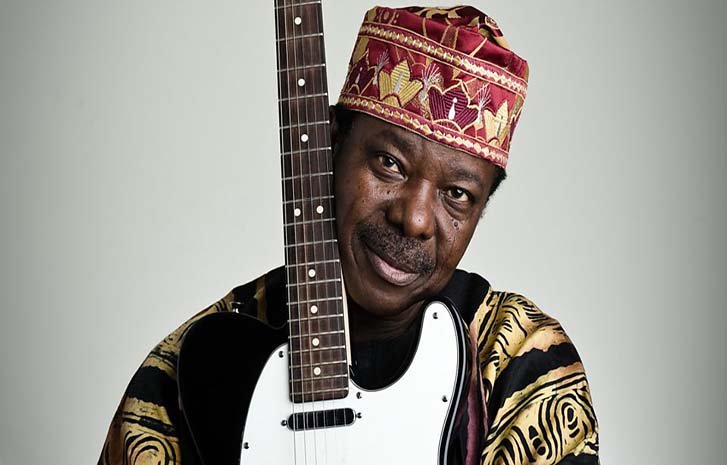
GlenChief Sunday Adeniyi Adegeye, professionally known as King Sunny Adé, is a Nigerian jùjú singer, songwriter, and multi-instrumentalist. Born on 22 September 1946 in Ondo, Southern Region, Ondo State, Nigeria, he holds Nigerian nationality and comes from a royal Yoruba family. He is widely regarded as one of the first African pop musicians to achieve major international success and remains a towering figure in global world music.
King Sunny Adé rose from local performances in Nigeria to global stages through his innovative blend of traditional jùjú with modern elements. His music, characterized by intricate guitar work, talking drums, and energetic live shows, has influenced generations and helped popularize African sounds worldwide. Over a career spanning more than six decades, he has released dozens of albums, earned Grammy nominations, and built businesses while supporting fellow artists through foundations and advocacy.
King Sunny Adé Early Life and Background
King Sunny Adé, whose full name is Sunday Adeniyi Adegeye, was born on 22 September 1946 in Osogbo, though his family roots trace to Ondo and Akure. He belongs to a Nigerian royal family, making him an Omoba of the Yoruba people. His connection to royalty comes through his mother’s side, the Adesida dynasty. maternal grandfather’s relatives included Oba Adesida I, who ruled Akure for 60 years.
His father worked as a church organist and small-time trader, while his mother, Maria Adegeye (née Adesida), was a trader who sold items like bean cakes. The family faced challenges after his father died when Sunny Adé was around eight years old. His mother then raised the children, showing remarkable strength. Growing up in Osogbo, an arts center, he developed a deep love for music from an early age. He enjoyed percussion and would imitate dances and performances he saw.
Despite his royal background, Sunny Adé did not grow up in luxury. His parents, particularly his mother, expected him to pursue a professional career such as law, engineering, or medicine. Music was not considered suitable for someone of his status. Yet, the young Adeniyi found himself drawn to local musicians and highlife bands. He attended schools like African School, Methodist School, St. Benedict, and St. Charles in Osogbo but left grammar school in Ondo City without completing higher education. He told his mother he was heading to the University of Lagos, but instead pursued music in Lagos. This decision strained family relations initially, but his success later brought pride.
King Sunny Adé Education
King Sunny Adé received his early education in Osogbo and Ondo areas. He attended primary schools and some secondary education at institutions such as St. Charles Grammar School. However, his formal schooling ended as he prioritized music. He did not attend university, a fact he has openly discussed in interviews. Despite this, he has received numerous honorary degrees and serves as a visiting lecturer or professor at places like Obafemi Awolowo University in Ile-Ife. His practical experience and self-driven learning in music and business have proven more valuable than traditional academic paths for his achievements.
King Sunny Adé Musical Beginnings
King Sunny Adé started his professional music journey in the 1960s in Lagos. He played part-time percussion with jùjú bands led by figures like Sunday Ariyo and Idowu Owoeye. He then joined Moses Olaiya’s Federal Rhythm Dandies, a highlife band, gaining valuable experience. In 1965 or 1966, he formed his own group, initially called Sunny Adé and His High Society Band, which soon became the Green Spots.
His early recordings included singles like “Alanu L’Oluwa” in 1967 and the hit “Challenge Cup” around 1968-1970, which sold massively and earned him a gold disc. These successes helped him stand out in the competitive Lagos music scene. He drew influences from jùjú pioneers like Tunde Nightingale and I.K. Dairo, incorporating elements of their “So wa nbe” style.
King Sunny Adé Rise to National Prominence
By the 1970s, King Sunny Adé had become a major force in Nigerian jùjú music. He renamed his band the African Beats around 1974 and founded his independent label, Sunny Alade Records, in 1975 after leaving another company. This move gave him greater control over his productions. Albums like Sunny Ade Vol. 1 and others released in this period solidified his reputation. Fans and journalists declared him “King of Juju” in 1977 after polls and acclaim, a title that stuck.
His music appealed widely due to its danceable rhythms, praise singing, and social commentary. Performances often lasted long into the night, featuring elaborate choreography and audience interaction. He competed healthily with contemporaries like Ebenezer Obey, sometimes playfully pretending rivalry to boost interest.
King Sunny Adé International Breakthrough and Career Highlights
King Sunny Adé achieved global fame in the early 1980s. Producer Martin Meissonnier introduced him to Island Records’ Chris Blackwell. The 1982 album Juju Music became a landmark, praised for its fresh fusion and leading to tours in Europe and North America. Critics hailed it as one of the year’s best dance albums, and Sunny Adé earned comparisons to Bob Marley as a representative of African music.
The follow-up Synchro System (1983) earned his first Grammy nomination, the first for a Nigerian artist. Aura (1984) featured collaborations, including Stevie Wonder on harmonica. Though his time with Island ended, these releases opened doors for other African artists and popularized world music.
Later albums like Odu (1998), a collection of traditional Yoruba songs, brought another Grammy nomination. Other notable releases include E Dide (Get Up) (1995) and Seven Degrees North (2000). He has released around 120 albums or more over his career, with highlights featuring intricate guitar work and percussion.
King Sunny Adé introduced innovations to jùjú, such as the pedal steel guitar (as a substitute for traditional instruments), synthesizers, clarinet, vibraphone, and more electric guitars. His band often featured over 20 members, creating a big-band sound with call-and-response vocals, talking drums, and guitar sections mimicking percussion. Live shows emphasized energy, dancing, and extended jams.
King Sunny Adé Notable Songs and Albums
King Sunny Adé has produced a vast catalog. Early hits included “Alanu L’Oluwa,” “Challenge Cup,” and tracks from the Green Spots era. International breakthroughs featured songs like “Ja Funmi” and “Ma Jaiye Oni” from Juju Music. Other popular tracks across his discography include “Eje Nlo Gba Ara Mi,” “365 Is My Number,” and praise songs like “Penkele.” Albums such as Synchro System, Aura, Odu, and many Sunny Alade releases showcase his evolution from traditional jùjú to syncretic styles blending highlife, rock, dub, and Yoruba elements.
His music preserves Yoruba oral traditions through poetic lyrics (ewi) and praise singing while appealing to modern audiences. Many songs promote positive values, unity, and enjoyment.
King Sunny Adé Acting and Media Appearances
Beyond music, King Sunny Adé appeared in films. His music featured in Hollywood movies like Breathless (1983) and One More Saturday Night (1986). He acted in Robert Altman’s O.C. and Stiggs (1987). In Nigeria, he featured in Nollywood films in the 2000s and later projects like Fifty (2015) and Alakada: Bad and Boujee (2024).
King Sunny Adé Achievements and Recognitions
King Sunny Adé’s achievements include multiple Grammy nominations, making him a pioneer for African artists. He received the Order of the Federal Republic and various national honors. Inductions into halls of fame, such as Hard Rock Cafe and The Headies, along with AFRIMA awards, recognize his legacy. He has been honored for contributions to world music and served in roles like ambassador for Nigeria’s “Change Begins With Me” campaign.
As a businessman known as “The Chairman,” he built companies in oil, mining, film, nightclubs, and more, employing hundreds. His leadership in the Musical Copyright Society of Nigeria fights piracy and protects artists’ rights.
King Sunny Adé Business Ventures and Philanthropy
King Sunny Adé founded the King Sunny Adé Foundation, which includes a performing arts center, recording studio, and housing for young musicians on land donated in Lagos. It supports children of deceased musicians and elderly artists. He also established radio stations and other initiatives to nurture talent.
King Sunny Adé Personal Life
King Sunny Adé maintains a large family. He has multiple wives and numerous children, estimates varying but often cited around a dozen or more. He has spoken about polygamy and ensuring unity among his children, many of whom he supports in education and other pursuits. Some family members assist in his businesses or music. Recent public family discussions have highlighted dynamics around his management and well-being in later years, but he continues active performances.
He identifies as Christian, raised Methodist, and credits his mother’s influence. Despite early family opposition to music, he reconciled through success. Sunny Adé values education for his children and has honorary academic ties.
Read More: Alicia Kanini Biography, Age, Net Worth, Education, Husband and Family Background
King Sunny Adé Legacy and Influence
King Sunny Adé transformed jùjú from a local genre into a global force. His innovations expanded instrumentation and performance styles, inspiring artists in Nigeria and abroad. He paved the way for world music’s rise in the 1980s and remains active, performing and mentoring. His blend of tradition and modernity preserves Yoruba culture while embracing fusion.
Conclusion
King Sunny Adé stands as a monumental figure in African music history. From humble beginnings in Osogbo to international acclaim, his dedication to innovation, cultural pride, and community support defines his enduring impact. His music continues to bring joy, rhythm, and connection across generations and borders.
FAQs
Who is King Sunny Adé? King Sunny Adé is a legendary Nigerian jùjú musician born Sunday Adeniyi Adegeye, known for popularizing African music globally.
When and where was King Sunny Adé born? He was born on 22 September 1946 in Ondo, Nigeria, and grew up in Osogbo.
What is King Sunny Adé famous for? He is famous for his jùjú music, innovative guitar techniques, energetic live performances, and albums like Juju Music and Synchro System.
How many Grammy nominations does King Sunny Adé have? King Sunny Adé has received at least two Grammy nominations, including for Synchro System and Odu.
What businesses does King Sunny Adé own? He owns or has interests in companies related to oil, mining, film, music labels, nightclubs, and the King Sunny Adé Foundation.
Is King Sunny Adé still performing? Yes, as of recent years, he continues to perform and engage in music and public activities despite his advanced age.
What instruments does King Sunny Adé play? He is a multi-instrumentalist, renowned for guitar, and incorporates talking drums, pedal steel, synthesizers, and more in his ensemble.

 Glen
Glen