 Glen
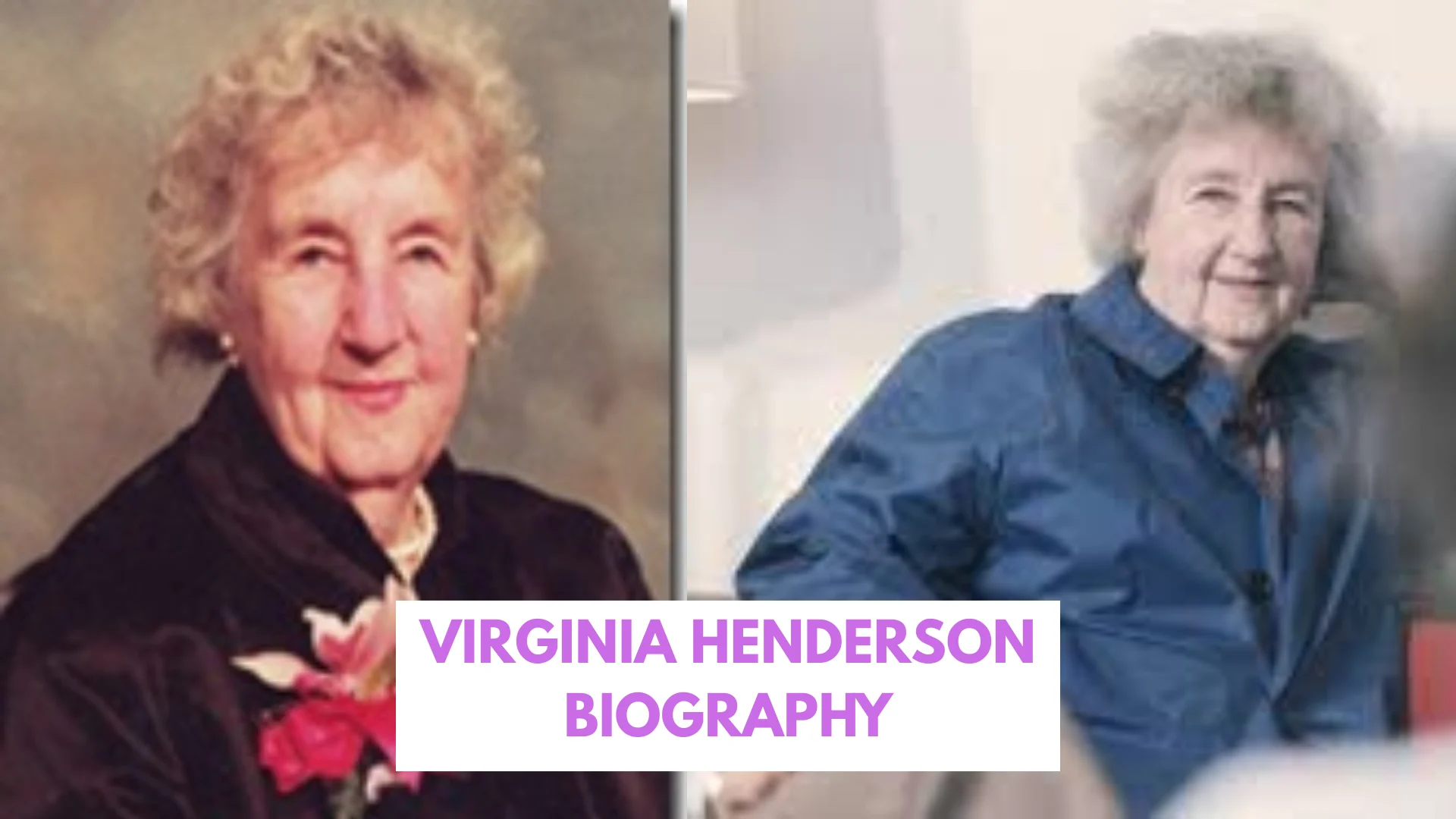
GlenVirginia Avenel Henderson is one of the most influential figures in modern nursing. Known as “the first lady of nursing,” Henderson transformed how the profession sees its purpose — from task-oriented care to an emphasis on patient independence and human needs. This deep-dive biography explores her early life, career milestones, core theories (including the famous 14 basic needs), major publications, honors, and lasting legacy in nursing education and practice.
Data
- Full Name: Virginia Avenel Henderson
- Born: November 30, 1897
- Death: March 19, 1996
- Birthplace: Kansas City, Missouri, United States
- Nationality: American
- Occupation: Nurse, Nursing Theorist, Researcher, Author, Educator
- Parents: Daniel B. Henderson (father), Lucy Abbot Henderson (mother)
- Siblings: She was the fifth of eight children
- Spouse: Not married
- Children: None
Early life and education
Virginia Avenel Henderson was born on November 30, 1897, in Kansas City, Missouri. She was the fifth of eight children and grew up in a family that valued education and public service. Henderson trained as a nurse and later pursued further education in public health and research — a combination that shaped her lifelong interest in professionalizing nursing and grounding it in rigorous study.
Nursing career — practitioner, teacher, researcher
Henderson’s professional life combined clinical work, teaching, and research. She worked in hospitals and later became associated with influential nursing education institutions, including the Yale School of Nursing where she served as a research associate. Her career bridged bedside care and academic thinking, enabling her to write and teach from both practical and theoretical viewpoints.
The Definition of Nursing — a landmark idea
One of Henderson’s most important contributions is her definition of nursing, first articulated clearly in mid-20th century texts and summarized in The Nature of Nursing. Her definition reframed nursing’s purpose:
“The unique function of the nurse is to assist the individual, sick or well, in performance of those activities contributing to health or its recovery (or peaceful death) that he/she would perform unaided if he/she had the necessary strength, will or knowledge.”
This definition put the patient’s independence and functional needs at the center of nursing practice and education, moving the field toward patient-centered care and measurable outcomes.
The Need Theory — 14 basic human needs
Henderson developed the Need Theory (often called Henderson’s Need Theory), which organizes nursing care around 14 components of basic human needs. The theory’s practical goal: help individuals regain independence as quickly as possible. The 14 components commonly listed in nursing texts include activities such as:
- Breathe normally
- Eat and drink adequately
- Eliminate body wastes
- Move and maintain desirable posture
- Sleep and rest
- Select suitable clothing
- Maintain body temperature
- Keep the body clean and protected
- Avoid dangers in the environment
- Communicate with others
- Worship according to one’s faith
- Learn, discover, or satisfy curiosity
- Play and work
- Other essential life activities as applicable
These components provide a simple, comprehensive framework for nursing assessment and care planning.
Publications and major works
Henderson authored and co-authored several influential works in nursing research and theory. Notable publications include The Nature of Nursing: A Definition and Its Implications for Practice, Research and Education and collaborative research compilations such as Nursing Research: A Survey and Assessment (with Leo Simmons). She also directed the Nursing Studies Index, a major bibliographic project that cataloged decades of nursing research and became a critical resource for the field.
Honors, awards, and recognition
Throughout her long career, Virginia Henderson received many honors. She was awarded the Christiane Reimann Prize by the International Council of Nurses in 1985 — one of the profession’s highest recognitions — and was made an honorary fellow of the Royal College of Nursing (FRCN). Henderson received multiple honorary degrees and was later inducted into halls of fame recognizing her foundational role in nursing education, research, and theory. Institutions and repositories — such as the Virginia Henderson Repository — now preserve her papers and promote continued scholarship on her ideas.
Why Henderson’s ideas still matter
Several reasons explain why Henderson remains central to nursing thought:
- Simplicity and applicability: The 14 basic needs are straightforward and easy to use across settings.
- Patient-centered focus: Her definition emphasizes patient independence, dignity, and education.
- Research and education bridge: Henderson helped make nursing a discipline that values evidence and systematic inquiry.
Nursing curricula worldwide still teach Henderson’s concepts because they offer a functional map for assessing patient needs and planning individualized care.
Later life and death
Virginia Henderson lived a long life, continuing to write and influence nursing well into her later years. She died on March 19, 1996, at the age of 98. Her work and archives are preserved by nursing organizations that continue to celebrate her influence on the profession.
Practical examples — Henderson’s theory in action
To see Henderson’s ideas at work, consider these quick examples:
- A postoperative nurse uses the 14 needs to assess whether the patient’s pain control allows normal breathing and movement (needs 1 and 4), plans interventions, and teaches the patient exercises to regain independence.
- In community care, a nurse teaching a diabetic patient to self-administer insulin addresses the “knowledge” and “learning” aspects of Henderson’s model, aiming to restore self-care ability.
FAQs
Who was Virginia Henderson?
Virginia Avenel Henderson (1897–1996) was a nurse, researcher, educator, and theorist known for defining nursing and developing the Need Theory centered on 14 basic human needs.
What are the 14 basic needs in Henderson’s theory?
They include breathing normally; eating and drinking; elimination; movement and posture; sleep and rest; clothing; body temperature; hygiene; avoiding dangers; communication; worship; learning; play and work; and related life activities. Wording may vary across texts.
Why is Henderson’s definition of nursing important?
Her definition centers nursing on assisting patients to regain independence, reframing nursing as a discipline that promotes function, dignity, education, and recovery.
Did Henderson write books?
Yes — important works include The Nature of Nursing and collaborative research texts, plus the Nursing Studies Index.
Is Henderson’s theory still used today?
Yes. Henderson’s practical, patient-centered framework is still taught in nursing programs and applied in clinical practice for assessment and care planning.
Conclusion
Virginia Henderson’s life and work reshaped nursing by clarifying its purpose and giving the profession a usable, humane framework: help people perform the essential activities they would do for themselves if they could. Her definition of nursing and the 14 basic needs remain core teaching tools and practical guides for nurses worldwide. Through writing, teaching, and research, Henderson elevated nursing into a discipline grounded in both compassion and evidence — a legacy that endures in every curriculum and bedside interaction that prioritizes patient independence.


 Glen
Glen