Glen
Glen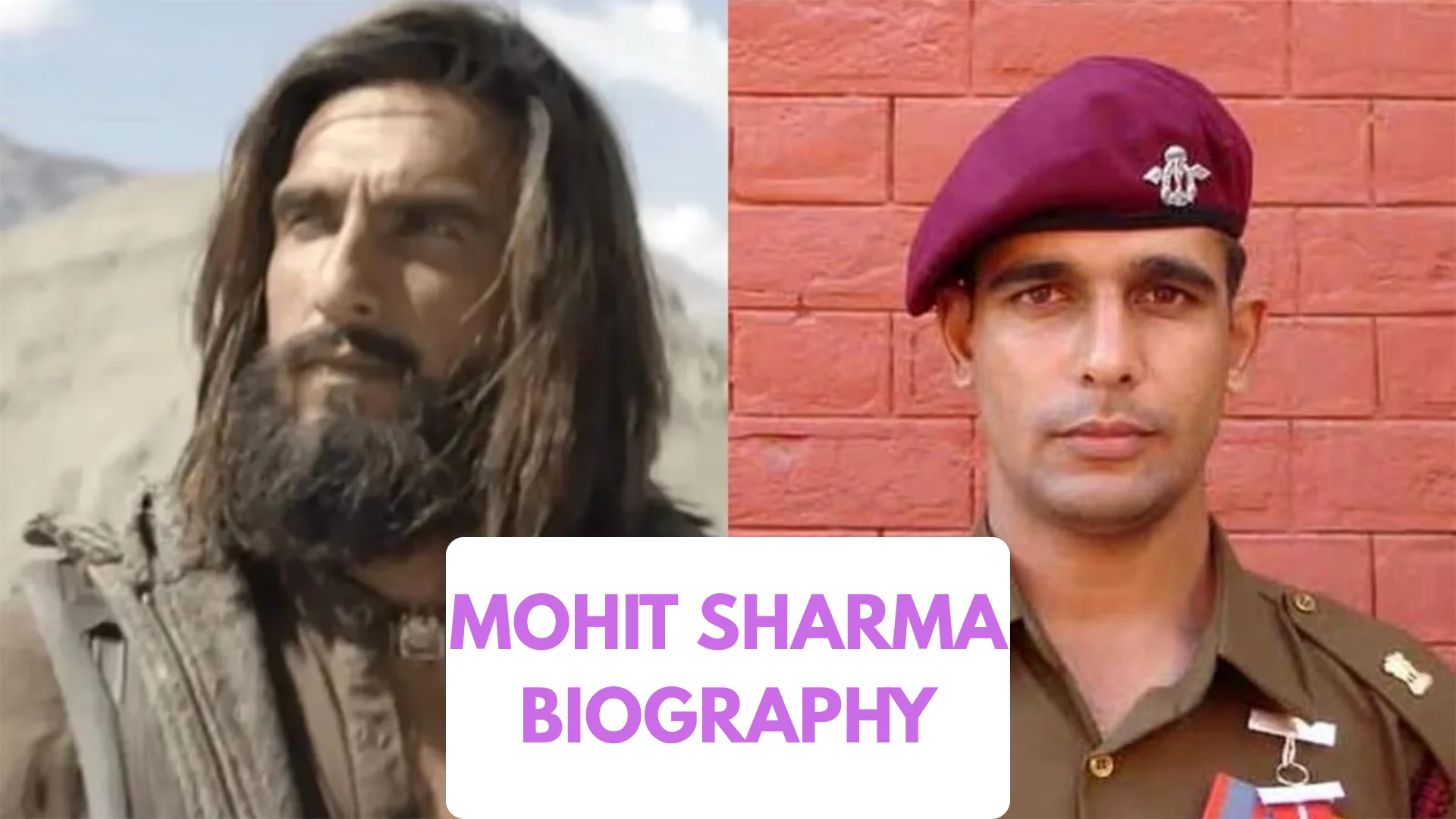
Major Mohit Sharma is remembered in India as a fearless Special Forces officer whose bravery and sacrifice became a symbol of national courage.
Born in Rohtak (Haryana) in 1978, he served with the elite 1st Battalion, Parachute Regiment (Special Forces) and was posthumously awarded the Ashoka Chakra, India’s highest peacetime gallantry award, after a daring counter-terror operation in Kupwara in March 2009.
Data
- Full Name: Mohit Sharma
- Stage Name: — (not applicable)
- Born: 13 January 1978
- Age: 31 (at time of death)
- Death: 21 March 2009
- Birthplace: Rohtak, Haryana, India
- Nationality: Indian
- Occupation: Indian Army Officer (Para Special Forces)
- Parents: Rajendra Prasad Sharma (father), Sushila Sharma (mother)
- Siblings: Elder brother — Madhur Sharma
- Spouse: Major Rishima Sharma
- Children: None (at time of his death)
Early Life and Education
Mohit Sharma was born on 13 January 1978 in Rohtak district, Haryana, to Rajendra Prasad Sharma and Sushila Sharma. He was often called “Chintu” by family and “Mike” by friends and coursemates. From school days he showed curiosity and discipline—qualities that later helped him clear the NDA (National Defence Academy) entrance and pursue an Army career.
After finishing his schooling (he completed 12th at Delhi Public School, Ghaziabad), Mohit cleared the SSB and joined the NDA in December 1995; later he attended the Indian Military Academy (IMA), where he was commissioned as a lieutenant in December 1999.
Joining the Indian Army and Choosing the Special Forces
Mohit Sharma’s ambition was clear: to be part of the infantry and, more ambitiously, the Special Forces. In December 2002 he opted for the Para (Special Forces) and became a trained paratrooper and commando by June 2003. He later served as an instructor and was known for his physical fitness, tactical acumen, and calm leadership under pressure. He was promoted to Major on 11 December 2005.
Operational Experience & Earlier Gallantry
Before the final operation that cost him his life, Major Mohit Sharma had already distinguished himself in counter-terrorism operations. He received the COAS Commendation for counter-terrorism duties and was awarded the Sena Medal for gallantry after a covert operation—recognition that marked him out as a soldier repeatedly placed on the toughest missions.
The Kupwara Operation — Final Battle and Sacrifice
On 21 March 2009, based on actionable intelligence of infiltration in the Kupwara sector of Jammu & Kashmir, Major Mohit Sharma led Bravo Assault Team into the dense Haphruda forest to intercept terrorists. Enemy fire came from multiple directions and several commandos were wounded in the initial onslaught.
Displaying extraordinary courage, Sharma crawled forward under intense fire to rescue two injured comrades, then engaged the terrorists. Reports and official citations state that he eliminated multiple terrorists during the firefight, but sustained severe gunshot wounds and later succumbed to his injuries. For this act of conspicuous bravery and supreme sacrifice he was later posthumously awarded the Ashoka Chakra.
Awards, Honors and Recognition
- Ashoka Chakra (Posthumous) — India’s highest peacetime gallantry award.
- Sena Medal — For a previous covert operation and conspicuous courage.
- COAS Commendation Card — For exemplary counter-terrorism duties.
His legacy has been preserved through multiple memorials and tributes, including the renaming of a metro station in Ghaziabad to Major Mohit Sharma Rajendra Nagar metro station.
Personal Side — Music, Mentorship, and Character
Those who knew him describe Major Mohit Sharma as a multi-faceted person: disciplined soldier, patient mentor, and music lover. He played the guitar, mouth organ and synthesizer and would often pick up new instruments—reflecting both curiosity and the discipline to master them. As an instructor at Belgaum, he trained commandos and was respected for his calm approach and focus on realistic training.
Legacy and Why He Still Matters
Major Mohit Sharma’s life resonates for several reasons:
- Exemplar of Special Forces professionalism — he served in 1 Para (SF).
- Courage under fire — his actions saved comrades and neutralized threats during the Kupwara operation.
- Public remembrance — awards, renamings, and media ensure his story remains known.
FAQs — Frequently Asked Questions
When and where was Major Mohit Sharma born?
He was born on 13 January 1978 in Rohtak, Haryana.
Which unit did he serve with?
Major Mohit Sharma served with the 1st Battalion, Parachute Regiment (Special Forces).
What awards did he receive?
He received the Ashoka Chakra (posthumous), Sena Medal, and the COAS Commendation.
When did he die and in what operation?
He was martyred on 21 March 2009 during a counter-terrorism operation in the Haphruda/Hafruda forest in Kupwara, Jammu & Kashmir.
Conclusion
Major Mohit Sharma’s biography is more than a collection of milestones—it is a study in leadership, courage, and selflessness. From Rohtak to the NDA, from the Special Forces to the Kupwara forest, his life embodies the highest traditions of service. His Ashoka Chakra citation and continuing remembrance show how a single act of bravery can inspire a nation and define a legacy.

 Glen
Glen