Glen
Glen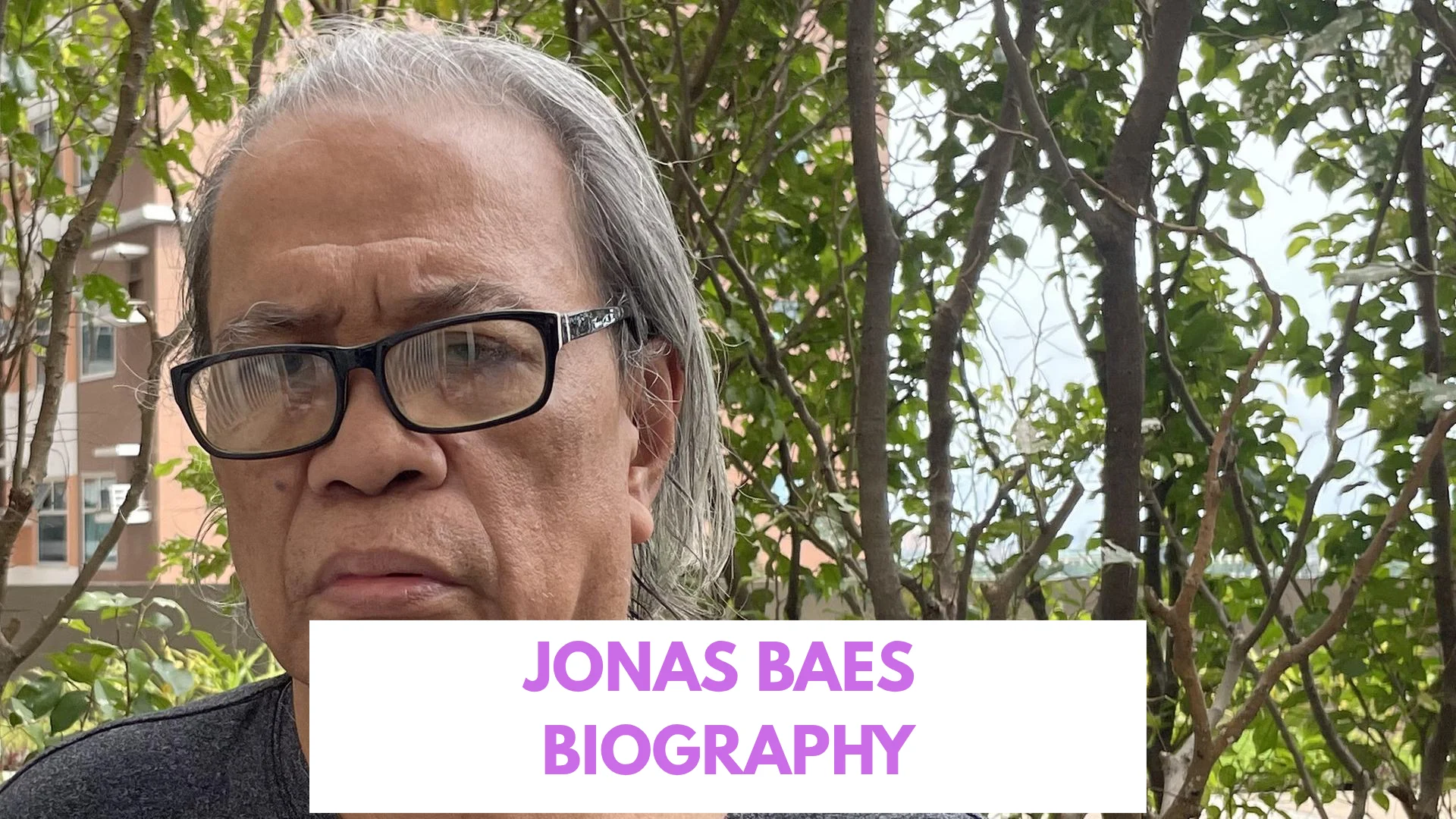
Jonas Baes (born 1961) is a prominent Filipino composer, ethnomusicologist, and cultural activist whose experimental and interdisciplinary works have contributed significantly to contemporary Philippine and Southeast Asian music.
Known for blending indigenous musical practices with avant-garde and political thought, Baes has built a portfolio that spans composition, academic research, performance projects, and institution-building for the next generation of composers.
Data
- Full Name: Jonas U. Baes
- Born: 1961
- Age: About 64 (as of 2025)
- Death: — (he is living)
- Birthplace: Los Baños, Laguna, Philippines
- Nationality: Filipino
- Occupation: Composer, Ethnomusicologist, Professor, Cultural Activist
- Siblings: He had a brother, Aloysius “Ochie” Baes, a noted activist.
Early life and education
Jonas Baes was born in 1961 in Los Baños, Laguna, Philippines. He began his formal musical studies at the University of the Philippines College of Music, enrolling in 1977 where he studied under influential Filipino composers and scholars, including Ramon P. Santos, and was exposed to the pioneering work of José Maceda. His immersion in the sounds and traditions of Filipino indigenous groups during these formative years—particularly the Iraya-Mangyan of Mindoro—deeply shaped his compositional voice and research interests. Later, Baes broadened his horizons through studies in Germany, where he studied with Mathias Spahlinger at the Musikhochschule Freiburg.
Ethnomusicology and research
Alongside composition, Baes built a respected career in ethnomusicology. His research has focused on the music, cultural politics, and social realities of marginalized and indigenous communities in the Philippines — for example, the Iraya-Mangyan and Dumagat peoples. His academic writings explore themes such as marginality, cultural loss, and the sociology of musical practices, and have been published in international peer-reviewed journals. This dual path—academic and artistic—allows Baes to draw from fieldwork and scholarly theory to inform pieces that are both musically inventive and culturally grounded.
Musical style and major works
Jonas Baes is recognized for experimental, interdisciplinary pieces that often incorporate traditional instruments, field recordings, extended vocal techniques, and participatory performance practices. His works interrogate modernity and cultural change while exploring aesthetic theories and social critique. He composes for a variety of settings: chamber ensembles, mixed media, site-specific works, and pieces that explicitly engage communities outside traditional concert contexts. Baes’ music has been presented in festivals and concerts across Asia, Europe, and North America, demonstrating both local rootedness and international relevance.
Teaching, mentorship, and institution building
Baes has a long record as an educator and mentor. He is a Professor of Composition at the University of the Philippines, where he has trained many young Filipino composers. In 2009 he founded the Manila Composers Lab—an international workshop platform designed to develop and expose young composers in Southeast Asia to international contemporary-music practices. In 2015 he launched the Ripieno Ensemble PH, a group aimed at fostering a “local modernity” in Philippine music practice by combining contemporary techniques with local musical resources. These initiatives show Baes’ commitment to building infrastructure and networks for composers and performers in the region.
Activism and cultural politics
Baes has been vocal about cultural politics and the effects of modernization on indigenous ways of making music. His academic and artistic projects critique the commodification of culture and the marginalization of minority voices. Through performances that bring indigenous music into contemporary contexts, as well as through writings that analyze the sociopolitical forces shaping musical life, Baes engages the listener and reader in ethical and political reflection.
International recognition and collaborations
Although his work is rooted in the Philippines, Baes’ compositions and scholarship have attracted international attention. He has been invited as guest professor and artist in Germany, Japan, Malaysia and elsewhere; his pieces have been performed at international festivals and academic conferences. These collaborations reinforce the global dimension of his practice while keeping the Philippines’ musical concerns at the center.
Selected works and projects (highlights)
- Composition projects integrating Iraya-Mangyan musical elements and field recordings.
- Founding the Manila Composers Lab (2009) to mentor emerging composers in Southeast Asia.
- Creating the Ripieno Ensemble PH (2015) to explore local-modern practices in Philippines contemporary music.
Impact and legacy
Jonas Baes is best understood as a bridge-builder: between scholarship and composition, between indigenous practices and avant-garde techniques, and between Filipino music and international contemporary music scenes. His legacy is visible in the composers he has mentored, the ensembles he created, and the cultural conversations his work continues to inspire—about identity, preservation, and artistic innovation.
FAQs
When and where was Jonas Baes born?
Jonas Baes was born in 1961 in Los Baños, Laguna, Philippines.
What are Jonas Baes’ main occupations?
He is a composer, ethnomusicologist, cultural activist, and professor of composition.
What musical traditions influenced Baes’ compositions?
Baes’ work is strongly influenced by indigenous music of the Philippines—especially the Iraya-Mangyan of Mindoro—and by modern European avant-garde techniques learned during studies abroad.
Has Jonas Baes founded any music organizations?
Yes—he founded the Manila Composers Lab (2009) and the Ripieno Ensemble PH (2015) to develop local composition practices and mentor young composers.
Where can I hear or read more about his work?
Baes’ music has been performed internationally; academic profiles, university pages (University of the Philippines), and living-composers or contemporary-composer databases carry biographies and lists of works. Specific recordings or scores may be accessible through university libraries, contemporary music festivals, and academic publications.
Conclusion
Jonas Baes stands as a vital figure in contemporary Philippine music: an artist whose work dissolves rigid boundaries between scholarship and composition, modernity and tradition, the academy and local communities. Through teaching, research, performance, and institution building, Baes has nurtured a generation of composers and opened new spaces for musical exchange. For anyone interested in the intersections of ethnomusicology, activism, and experimental composition, Jonas Baes’ life and work offer rich, challenging, and inspiring material to explore.


 Glen
Glen