Glen
Glen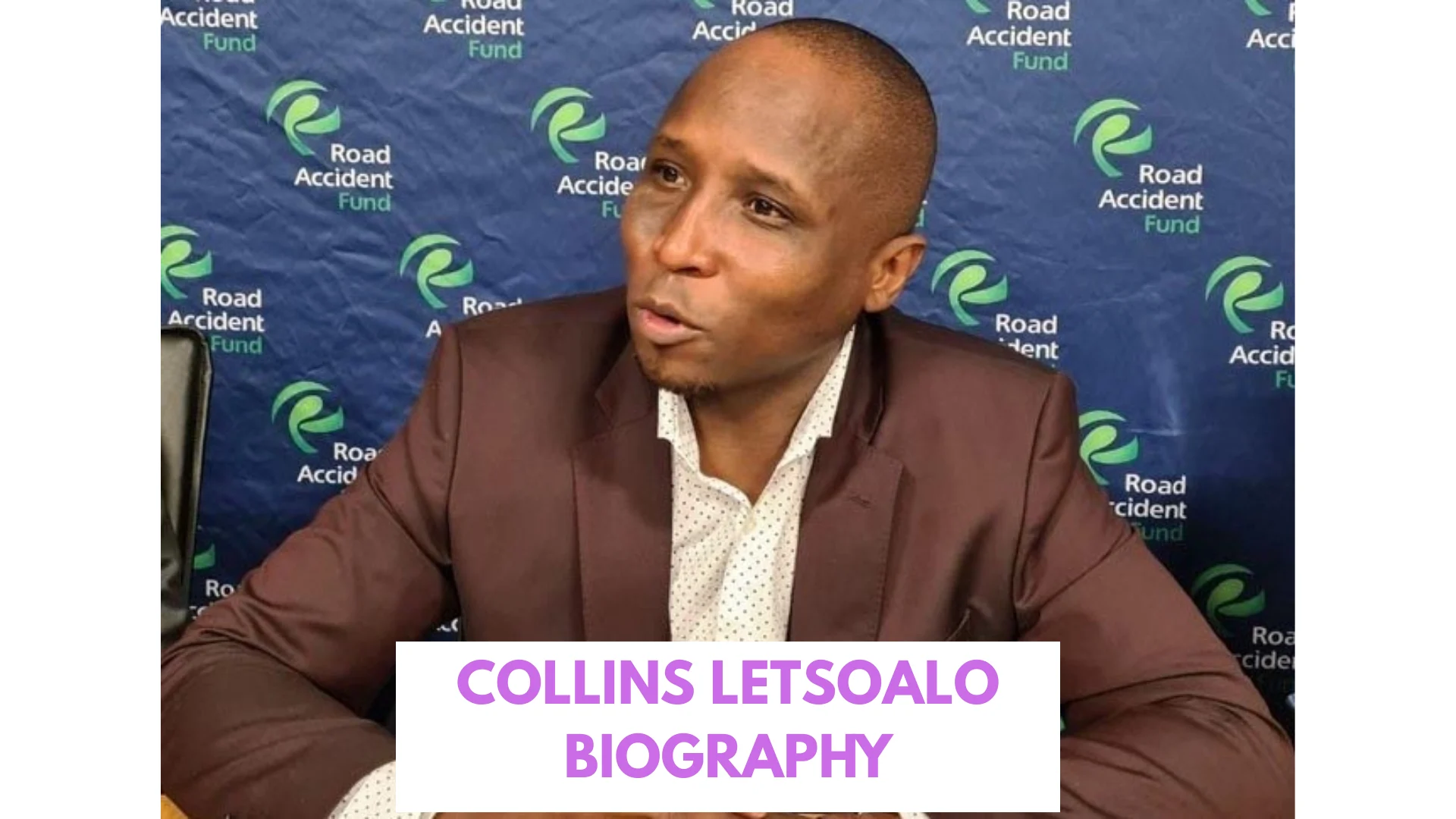
Collins Letsoalo is a South African economist, banker, and public-sector executive known for his leadership at major state-owned entities.
His career has been marked by reform efforts, financial expertise, and controversy. This biography delves into his early life, education, career journey, significant achievements, allegations, and what the future holds for him.
Early Life & Education
Collins Letsoalo is said to have been born in Ga-Molepo, a small village in Limpopo Province, South Africa. Growing up in a modest household, he was recognized for his academic talent and strong work ethic from an early age.
He pursued a Bachelor of Commerce in Economics. He also holds multiple advanced qualifications: an Advanced Diploma in Central Banking, a Diploma in Treasury Management and Trade Finance, and a Postgraduate Diploma (cum laude) in Management. These credentials gave him a solid foundation in economics, banking, and public finance.
Career Journey
Early Career
Letsoalo began his professional journey in the financial sector, working at the South African Reserve Bank. His exposure to national monetary policy and financial systems helped him build deep insight into macro-economic management.
Later, he joined the Department of Public Enterprises, where he became involved in restructuring failing state-owned enterprises. His expertise in financial management and reform proved useful in improving governance and financial stability in public entities.
State-Owned Entities & Leadership Roles
His public-sector trajectory includes senior roles in several significant institutions:
- Passenger Rail Agency of South Africa (PRASA): In 2016, Letsoalo was appointed Acting Group CEO of PRASA, tasked with turnaround strategies. However, controversy erupted around a salary hike. He denied wrongdoing, arguing approvals existed; nevertheless, he was removed in early 2017.
- Road Traffic Management Corporation (RTMC): He also spent time seconded to RTMC through the transport department, contributing to its restructuring and financial stabilization.
- Road Accident Fund (RAF): He became Acting CEO and — in August 2020 — was formally appointed CEO. He was hailed as a technocrat capable of cleaning up a troubled institution.
Achievements & Reforms at RAF
During his tenure at RAF, Letsoalo introduced aggressive cost-cutting and reform measures:
- He moved claims-handling in-house, reducing reliance on external law firms.
- He claimed that these reforms saved the RAF tens of billions in costs.
- Letsoalo positioned himself as an “anti-lawyer” reformer, accusing parts of the legal establishment of profiting from inflated claims.
Controversies & Legal Challenges
Despite the reform narrative, Letsoalo’s leadership was shadowed by serious allegations:
Corruption & Procurement Irregularities
In 2025, a preliminary report by the Special Investigating Unit implicated him in procurement interference, especially a controversial lease deal for RAF’s Johannesburg offices, allegedly favouring a bidder tied to a major pension fund. Other accusations included irregular contracts — long-term extensions for services and unlawful tender awards.
Governance & Financial Mismanagement
According to investigative reports, weak board oversight and poor reporting structures allowed for possible misstatements in RAF’s finances. The SIU also raised concerns that the RAF may have delayed or blocked legitimate claims, worsening backlogs.
Refusal to Accountability & Suspension
In May 2025, Letsoalo was placed on “special leave” by the RAF board, pending investigation. By June, he formally challenged his suspension in court, calling it unlawful. He also reportedly failed to appear before SCOPA (Parliament’s Standing Committee on Public Accounts), which raised further political tensions. In August 2025, his contract expired, and he left the position.
Personal Life & Net Worth
Little is publicly known about his personal life: he is married, but tends to keep his private affairs out of the limelight. According to some sources, his estimated net worth as of 2025 lies between US$200,000 and US$500,000, derived from his public-sector roles and financial work.
Legacy & Future Outlook
The legacy of Collins Letsoalo is deeply contested. For supporters, he is a committed reformer who challenged entrenched interests and exposed systemic corruption. For critics, his tenure highlights governance failures: alleged procurement interference, contract mismanagement, and authoritarian leadership.
At present, much depends on the outcome of ongoing investigations. If exonerated, he might return to public service or assume another role — if not, his reputation may suffer irreparable damage.
FAQs
What is Collins Letsoalo known for?
He is known for leading key public-sector entities in South Africa, particularly as CEO of the Road Accident Fund (RAF), where he introduced major cost-cutting reforms.
What education does he have?
He holds a B.Com in Economics, an Advanced Diploma in Central Banking, a Diploma in Treasury Management & Trade Finance, and a Postgraduate Diploma in Management.
Why was he suspended from RAF?
He was placed on special leave amid allegations from the SIU that he interfered with procurement, notably a R79 million lease deal, among other governance issues.
Did he refuse to answer to Parliament?
Yes — he reportedly failed to appear before SCOPA (Parliament’s Standing Committee on Public Accounts), leading to political backlash.
Is his net worth publicly known?
Estimates place his net worth between US$200,000 and US$500,000, mainly from his public-sector career.
Conclusion
Collins Letsoalo is a multifaceted figure — an economist and reformer with high ambition, but one deeply embroiled in controversy. His career reflects the challenges faced by public-sector executives in South Africa: balancing reform with accountability, personal ambition with public trust. Whether history will remember him as a visionary cleaner or a problematic executive remains uncertain. The next chapters of his story depend heavily on the legal proceedings and investigations currently underway.


 Glen
Glen