 Glen
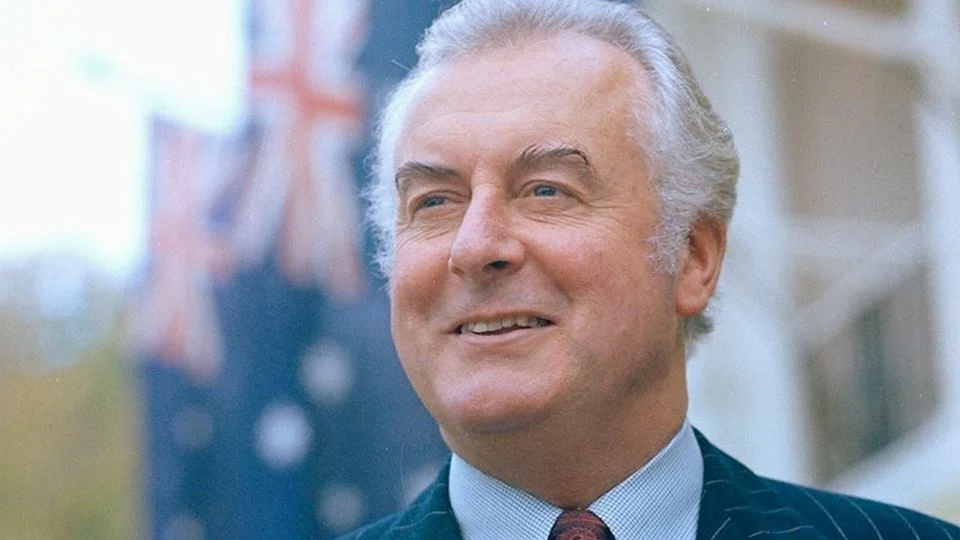
GlenGough Whitlam remains one of the most influential and controversial figures in Australian political history. As the 21st Prime Minister of Australia, serving from 1972 to 1975, Edward Gough Whitlam led a reform-driven government that fundamentally reshaped the nation’s political, social, and cultural institutions.
Known for his bold vision, intellectual authority, and progressive agenda, Whitlam’s leadership marked a turning point in modern Australian history. His legacy continues to inspire debate, admiration, and scholarly discussion decades after his dismissal.
Early Life and Family Background
Edward Gough Whitlam was born on July 11, 1916, in Kew, a suburb of Melbourne, Victoria. He was the son of Fred Whitlam, a respected public servant and Crown Solicitor for the Commonwealth, and Martha Whitlam, a former schoolteacher. Gough Whitlam grew up in Canberra, which was then emerging as Australia’s national capital. His upbringing in a politically aware household greatly influenced his interest in public service and governance.
Whitlam’s early education took place at elite institutions, including Telopea Park School and later Canberra Grammar School. His academic excellence was evident from a young age, laying the foundation for a lifetime devoted to intellectual rigor and public policy.
Education and Military Service
Whitlam attended the University of Sydney, where he studied arts and law. During his university years, he developed a strong interest in constitutional law, civil liberties, and social justice. His legal training would later become a defining feature of his political career.
During World War II, Gough Whitlam served in the Royal Australian Air Force (RAAF) as a navigator. His wartime service exposed him to the realities of global conflict and strengthened his belief in international cooperation, peace, and diplomacy. After the war, he returned to his legal studies and was admitted to the bar, beginning a successful legal career.
Entry into Politics
Whitlam joined the Australian Labor Party (ALP) in the 1940s, inspired by its commitment to equality, workers’ rights, and social reform. After several unsuccessful attempts, he was elected to the House of Representatives in 1952 as the Member for Werriwa, a seat he would hold for over two decades.
Throughout the 1950s and 1960s, Whitlam established himself as a powerful parliamentary performer and a leading reformist within the ALP. His sharp intellect and command of constitutional matters earned him widespread respect, even among political opponents.
Leadership of the Australian Labor Party
In 1967, Gough Whitlam became the leader of the Australian Labor Party. At the time, Labor had been in opposition for over two decades. Whitlam embarked on a mission to modernize the party, making it more electorally competitive and nationally focused.
He reformed party structures, centralized policy-making, and broadened Labor’s appeal beyond its traditional working-class base. These changes laid the groundwork for Labor’s eventual return to power.
Prime Ministership (1972–1975)
Gough Whitlam led the Labor Party to a historic election victory in December 1972, ending 23 years of conservative rule. His government wasted no time implementing an ambitious reform agenda that transformed Australia.
Some of Whitlam’s most significant achievements include the introduction of free university education, the expansion of healthcare, recognition of Indigenous land rights, and the establishment of diplomatic relations with China. His government also abolished conscription, promoted gender equality, and invested heavily in arts and culture.
Social and Cultural Reforms
Whitlam believed that government should actively promote equality and opportunity. Under his leadership, Australia saw major advances in education, healthcare, and social welfare. The creation of Medibank, Australia’s first universal healthcare system, was one of his most enduring achievements.
Whitlam also championed multiculturalism and Indigenous rights. His symbolic act of pouring soil into the hands of Indigenous leader Vincent Lingiari in 1975 became an iconic moment in Australia’s reconciliation journey.
Foreign Policy and International Relations
In foreign affairs, Whitlam pursued an independent and progressive approach. He withdrew Australian troops from Vietnam, strengthened ties with Asia, and emphasized Australia’s role in the United Nations. His recognition of the People’s Republic of China marked a significant shift in Australian diplomacy.
The 1975 Constitutional Crisis and Dismissal
Despite his achievements, Whitlam’s government faced economic challenges, internal party tensions, and fierce opposition. In November 1975, Governor-General Sir John Kerr dismissed Whitlam in an unprecedented constitutional crisis.
The dismissal remains one of the most controversial events in Australian history, raising enduring questions about democracy, constitutional powers, and political accountability.
Later Life and Death
After leaving office, Gough Whitlam remained active in public life, writing extensively and speaking on constitutional reform and social justice. He was widely respected as an elder statesman.
Whitlam passed away on October 21, 2014, at the age of 98. Tributes poured in from across Australia and the world, honoring his transformative impact on the nation.
Legacy and Historical Significance
Gough Whitlam’s legacy is defined by courage, reform, and a belief in the power of government to improve lives. While his time in office was brief, his influence was profound. Many of his policies laid the foundation for modern Australia.
Today, Whitlam is remembered as a visionary leader who challenged tradition and reshaped Australian society.
FAQs
Who was Gough Whitlam?
Gough Whitlam was the 21st Prime Minister of Australia and a major reformist leader.
When was Gough Whitlam Prime Minister?
He served from 1972 to 1975.
Why was Gough Whitlam dismissed?
He was dismissed during the 1975 constitutional crisis by the Governor-General.
What is Gough Whitlam famous for?
He is known for major social reforms, free education, healthcare, and foreign policy changes.
When did Gough Whitlam die?
He died on October 21, 2014.
Conclusion
The biography of Gough Whitlam tells the story of a leader who dared to imagine a better Australia. His reforms transformed education, healthcare, foreign policy, and social equality. Though his government ended controversially, his vision continues to shape the nation. Gough Whitlam remains a towering figure whose legacy endures in Australia’s democratic and social institutions.

 Glen
Glen