 Glen
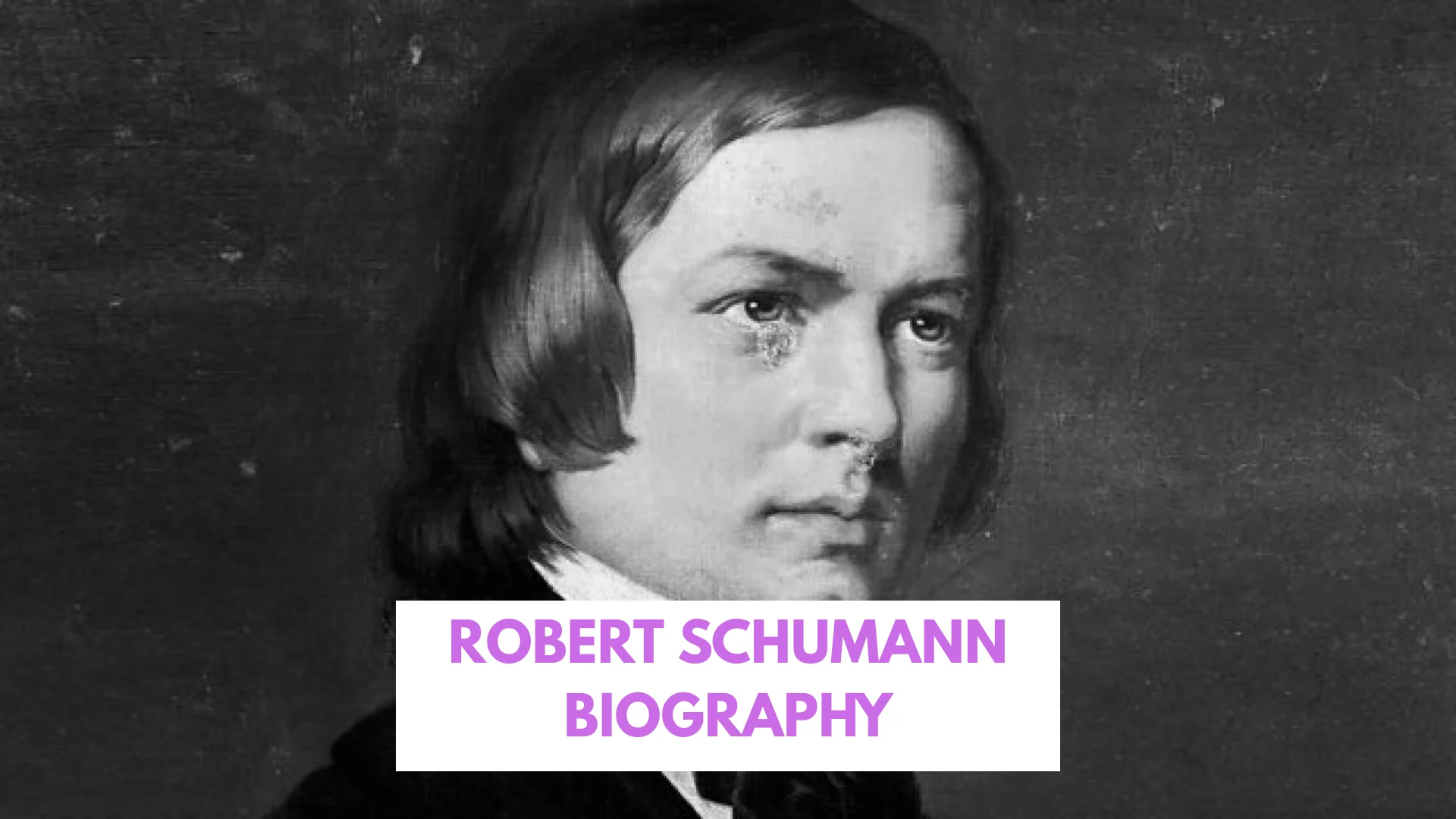
GlenRobert Schumann (1810–1856) stands among the towering figures of the Romantic era — a composer, critic, and thinker whose music and life story remain essential to understanding 19th-century art. His works — from intimate Lieder and piano pieces to large-scale symphonies and chamber music — reflect a mind of great imagination, emotional depth, and frequent turmoil. This biography examines Schumann’s life, his creative milestones, his relationships (especially with Clara Wieck), his battles with mental illness, and the long shadow he cast on later composers.
Data
- Full Name: Robert Schumann
- Born: June 8, 1810
- Death: July 29, 1856
- Age at Death: 46 years
- Birthplace: Zwickau, Saxony, Germany
- Nationality: German
- Occupation: Composer, Music Critic, Pianist
- Parents: August Schumann (father), Johanna Christiana Schumann (mother)
- Siblings: Emilie Schumann, Carl Schumann, Eduard Schumann, Julius Schumann
- Spouse: Clara Wieck Schumann
- Children: Marie, Elise, Julie, Emil, Ludwig, Ferdinand, Eugenie (7 children total)
Early Life and Education
Johann Christian Schumann was born on June 8, 1810, in Zwickau, a small mining town in Saxony (then part of Prussia). Raised in a cultured household — his father was a bookseller with a lively intellectual circle — Robert showed early interest in literature and music. He studied law in Leipzig and Heidelberg to please his parents, but music remained his passion.
Schumann’s music studies were intermittent and unconventional. He briefly studied piano but eventually abandoned a performing career due to hand problems and uncertainty about his technique. Instead he turned to composition and criticism. Early influences included Beethoven, Schubert, and the emerging German Romantic poets — all of which shaped his musical voice.
Rise as a Critic and Composer
In 1834 Schumann founded the influential journal Neue Zeitschrift für Musik (New Journal for Music), through which he championed new music and new ideas. As a critic he could be passionate and polemical: he promoted the works of Chopin and Schubert and criticized what he saw as empty virtuosity.
Compositional breakthroughs followed. Schumann produced a rich body of piano music — character pieces like Carnaval, Kinderszenen (Scenes from Childhood), and Kreisleriana — pieces that fused literary inspiration with musical invention. His song output (Lieder) is equally important: collections such as Dichterliebe (A Poet’s Love), op. 48, remain foundational in the German art-song tradition.
Clara Wieck — Partner, Muse, and Champion
Perhaps no relationship mattered more to Schumann’s life and art than his marriage to Clara Wieck. A virtuoso pianist and composer in her own right, Clara was the daughter of Schumann’s one-time piano teacher, Friedrich Wieck. Robert fell hopelessly in love with Clara in the late 1830s; their relationship faced fierce opposition from her father and legal obstacles before they finally married in 1840.
Clara’s influence was profound. She premiered many of Schumann’s works, edited his music when he was incapacitated, and balanced her own performing career with managing family responsibilities. Their partnership shaped much of Schumann’s creative output and emotional life. After Robert’s death, Clara continued to perform and champion his music, ensuring his reputation endured.
Peak Years: Symphonies, Chamber Works, and Song Cycles
The 1840s were Schumann’s most productive years. He wrote prolifically across genres: piano music, songs, chamber music, and the great orchestral works — notably the Spring Symphony (No. 1 in B-flat major, op. 38) and the Rhenish Symphony (No. 3, op. 97). His chamber music — the Piano Quintet in E-flat major, op. 44, and the Piano Quartet in E-flat major, op. 47 — helped redefine German chamber literature.
Schumann’s music often carries a narrative or literary subtext. His Lieder sets, particularly Dichterliebe (based on Heinrich Heine) and Liederkreis (settings of Eichendorff and Heine), fuse poetry with sensitive piano writing, elevating the song to a profound dramatic art.
Style and Musical Characteristics
- Character pieces: brief, concentrated moods and tableaux, often given evocative titles.
- Motivic imagination: recurring motifs knitting movements or sets together.
- Piano writing: texture that balances lyrical melody and intricate accompaniment.
- Rhythmic invention: syncopations, off-beat accents, and rhythmic ambiguity.
- Literary connection: explicit links to poems, novels, or imaginary characters (e.g., Florestan and Eusebius).
His music is simultaneously intimate and richly wrought, balancing playful lyricism with intense inwardness.
Mental Health Struggles
Schumann’s life was marred by recurrent mental illness. He experienced mood swings, auditory hallucinations, and episodes of deep depression. Scholars debate diagnoses retroactively — theories include bipolar disorder, neurosyphilis, and secondary effects of mercury or other medications of the era — but the exact medical cause remains uncertain.
In 1854 Schumann attempted suicide by jumping into the Rhine and, following continued deterioration, admitted himself to the psychiatric clinic in Endenich near Bonn. He spent the final two years of his life there, under care, until his death on July 29, 1856. These struggles affected his late compositional output and left a legacy of tragic genius that colored later perceptions of his work.
Later Reception and Legacy
After his death Clara and others worked to preserve Schumann’s music. By the late 19th and early 20th centuries, his reputation was secure. Composers including Brahms (a friend and protegé), Mendelssohn, and later twentieth-century musicians acknowledged his influence. Schumann’s innovations in song, piano miniatures, and the expressive possibilities of chamber music have inspired generations.
Today, his works are mainstays in concert halls and recordings. Musicologists continue to explore his manuscripts, letters, and critical writings, revealing a thinker as engaged with ideas as with sound.
Lesser-Known Facts
- Robert Schumann originally studied law and continued legal studies early in his career.
- He had a lifelong love of literature — names of piano pieces and entire cycles often refer to poems, novels, or characters.
- Schumann’s journal helped launch and defend the careers of other composers, notably Chopin and Brahms.
Frequently Asked Questions (FAQ)
When and where was Robert Schumann born?
He was born on June 8, 1810, in Zwickau, Saxony (then Prussia).
Who was Clara Wieck and why is she important?
Clara Wieck (later Clara Schumann) was a renowned pianist and composer, Robert’s wife and lifelong musical partner. She premiered many of his works and supported his legacy after his death.
What are Schumann’s most famous works?
Notable works include Carnaval, Kinderszenen, Kreisleriana, Dichterliebe, the Piano Quintet in E-flat major, and Symphonies No. 1 and No. 3.
Did Schumann suffer from mental illness?
Yes. He experienced severe mental health episodes and auditory hallucinations, and he spent the last two years of his life in a mental institution.
What influence did Schumann have on later composers?
Schumann influenced composers in the realms of song, piano literature, and chamber music. His blend of literary ideas with musical form inspired Brahms and many later Romantic and modern composers.
Are there recordings recommended for beginners?
Start with recordings of Dichterliebe, Kinderszenen, and the Piano Quintet. Look for respected performers in the Romantic repertoire on major classical labels.
Conclusion
Robert Schumann’s biography is a study in contrasts: lyrical tenderness and tumultuous intensity, critical clarity and raw personal suffering, tireless creativity and tragic decline. His music remains indispensable — poems set to piano, intimate character pieces, and vibrant orchestral works that continue to speak to performers and listeners. Understanding Schumann means appreciating a composer who turned private feeling into enduring art, and whose life story — especially his relationship with Clara — reminds us that great creativity often grows from complicated human lives.


 Glen
Glen