Glen
GlenIntroduction
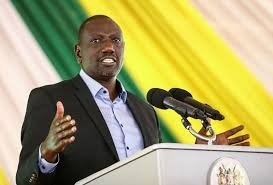
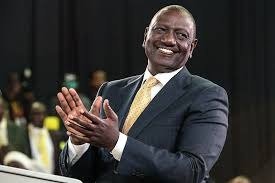
William Ruto’s genesis story is one of the most remarkable in Kenyan politics. He grew up selling peanuts and chickens along the Nairobi-Eldoret highway, a roadside business born of actual poverty in Uasin Gishu County’s Rift Valley. Decades later, he ran for president based on the same narrative, presenting Kenya’s 2022 election as a battle between the “hustlers,” regular working Kenyans, and the political dynasties that had long controlled the country’s government. William Ruto Biography.
William Ruto’s biography is hardly a clean success story. It’s a story of extraordinary political skill, intense personal conflict, Gen Z-led protests that nearly brought down his government, the historic impeachment of his deputy president, and an ongoing test of whether the “hustler” framing was a genuine conviction or the most effective campaign strategy in recent East African political history.
Who is William Ruto?
William Kipchirchir Samoei Arap Ruto is Kenya’s fifth and current president, having been inaugurated on September 13, 2022, after winning the August 9 election. He is a Kalenjin from the Rift Valley, of mixed Kipsigis and Nandi ancestry, born into humble rural circumstances and educated solely based on his own academic aspirations.
He earned a Bachelor of Science in Botany and Zoology from the University of Nairobi (1990); a Master of Science in Plant Ecology from the same university (2011); and a PhD in Plant Ecology from the University of Nairobi (2018), all while working in politics for three decades. He married Rachel Chebet Ruto in 1991, and they have six children together, including an adopted daughter, Nadia Cherono Ruto.
Before his presidency, he was Kenya’s deputy president from 2013 to 2022, as well as minister for agriculture and higher education and a member of Parliament for Eldoret North for three consecutive terms from 1997 to 2013.
Early Life
William Ruto was born on December 21, 1966, in Sambut, Kamagut Location, Uasin Gishu County, a remote Rift Valley region noted for its agricultural settlements and, historically, for its complicated ethnic politics.
His family was destitute. His father, Daniel Cheruiyot, was a small-scale farmer. Growing up, Ruto peddled peanuts and chickens along the Nairobi-Eldoret-Malaba route, a fact he would later use to fuel one of the most successful populist campaigns in contemporary African politics. He went to Kerotet Primary School, Wareng Secondary School in Eldoret, and Kapsabet High School in Nandi County for his A-levels.
What happened in Kapsabet paved the way for all that followed. He was admitted to the University of Nairobi, and it was during his undergraduate years, as an active member and chairman of the Christian Union choir, that he allegedly met with former President Daniel Arap Moi. Both Moi and Ruto were Kalenjin. That link, formed in the early 1990s, led Ruto into organized politics.
Political Rise
Ruto’s rise through Kenya’s political machinery is a lesson in strategic alliance-building, survival, and pivoting when the situation demands it.
1997: Elected Member of Parliament for Eldoret North on the KANU ticket; first of three consecutive terms.
2002 — Campaigns aggressively for Uhuru Kenyatta’s KANU presidential candidacy; Kenyatta loses to Mwai Kibaki
2007 — Switches to Raila Odinga’s Orange Democratic Movement (ODM) and wins Eldoret North again.
2008 — Appointed minister of agriculture in the post-election violent coalition administration, overseeing fertilizer subsidies and irrigation projects.
2010— Appointed Minister of Higher Education
2011 — Named by the ICC as one of six individuals accused of having organized and promoted the 2007/08 post-election violence that killed 1,200 people.
2012 — Forms the United Republican Party (URP) and joins the Jubilee Alliance with Uhuru Kenyatta’s TNA party.
2013 — Elected Deputy President; ICC case continues but is finally terminated in 2016 due to lack of evidence.
2017 — Reelected as Deputy President during Kenyatta’s second term.
2019 — Kenyatta’s “handshake” rapprochement with Raila Odinga essentially removes Ruto as the establishment’s favored successor.
2022 — Runs on the Kenya Kwanza platform under UDA and wins the presidential election with 50.49% of the vote to Odinga’s 48.85%; the Supreme Court affirms the outcome.
The ICC chapter is worth more than a cursory notice. In 2011, Ruto was listed as a suspect in Kenya’s 2007/08 post-election violence, along with five others, including then-President Kenyatta. Kenyatta and Ruto both faced prosecution at the International Criminal Court. Both prosecutions were later dismissed, with the prosecutor claiming witness influence and the Kenyan government’s lack of cooperation.
The 2022 Election
The William Ruto 2022 campaign is worth looking into because it represented a genuine political innovation, and understanding it explains a lot of what has happened since.
Ruto effectively reframed the election as a class battle rather than an ethnic one. He positioned himself as the candidate of the “hustlers” small traders, boda-boda motorcycle taxi operators, mama mbogas (market vegetable sellers), and casual laborers against Raila Odinga, who was supported by current President Kenyatta despite Kenyatta having been Ruto’s running partner twice before.
His campaign motto, “Bottom-Up Economic Transformation,” promised that policy would be constructed from the needs of Kenya’s poorest citizens up, rather than trickling down from elite planning. He appeared at roadside rallies, frequently mentioning his chicken-selling days, and rallied young people who were economically dissatisfied and ethnically weary.
He won by a margin of less than 2%. It was Kenya’s narrowest presidential victory ever. Odinga challenged it at the Supreme Court and lost. William Ruto was inaugurated on September 13, 2022.
The Presidency
Hustler’s Tax Problem
The underlying paradox of William Ruto’s administration became clear during the first year. To handle Kenya’s large public debt load inherited from the Kenyatta administration, which increased national debt from Sh1.89 trillion in 2013 to Sh8.59 trillion by 2022, Ruto’s government began hiking and instituting new taxes.
Kenyans who voted for economic assistance faced greater bills. The term “Zakayo” Swahili for Zacchaeus, the biblical tax collector, went viral on social media and stayed.
The Gen Z Uprising
The Finance Bill 2024, which proposed increased taxes on cooking oil, bread, financial transactions, and other commodities, sparked Kenya’s worst riots in a generation. The 2024 demonstrations were notable for their composition: they were mostly coordinated by Generation Z Kenyans over social media, with no political party membership or institutional opposition leadership.
On June 25, 2024, demonstrators stormed the Parliament Building in Nairobi. At least 22 people were killed by police. Kenya watched, as did the rest of the world.
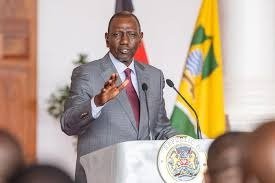
Ruto originally condemned the demonstrations as “treasonous.” But by June 26, he had completely changed his mind, saying that he would not sign the finance bill and would instead pursue austerity measures to reduce the budget deficit. On July 5, he hosted a live forum on X (formerly Twitter) to interact directly with protesters. On July 11, he sacked nearly the whole government.
It was one of the most abrupt and total political capitulations by an African head of state in recent memory, prompted solely by unorganized, leaderless youth agitation.
The Deputy President’s Impeachment
The political drama did not conclude with the protests. Tensions between Ruto and his deputy president, Rigathi Gachagua, reportedly existed almost from the start of the administration and erupted in October 2024 when the National Assembly launched impeachment proceedings against Gachagua, accusing him of corruption, inflaming ethnic tensions, and undermining the government.
Later that month, the Senate concluded the impeachment of Kenya’s Deputy President, the first in the country’s history. Gachagua disputed all claims, saying the action was politically motivated. Ruto chose Kithure Kindiki, the minister of the interior, to succeed him. Kindiki was sworn in on November 1, 2024.
The Adani Deals and Sudan
Ruto withdrew Adani Group commitments worth more than $2.5 billion in November 2024, including a disputed 30-year lease of Jomo Kenyatta International Airport and power transmission agreements, after the company was charged with corruption and bribery in the United States. Domestically, the decision was met with widespread approval.
His government was also scrutinized for its participation in the Sudanese civil war, notably after a February 2024 meeting with RSF leader Mohamed Hamdan Dagalo, which sparked suspicions that Kenya operated as a transit center for gold from RSF-controlled territory. Ruto claimed that Kenya was functioning as an impartial mediator.
Key Achievements and Policy Initiatives
Despite the instability, the William Ruto government has produced demonstrable results:
- Affordable Housing Program – constructing nearly 13,000 apartments for lower-income Kenyans in key cities.
- National Tree Growing Restoration Campaign—aims to plant 15 billion trees by 2032 to address deforestation and climate change.
- Talanta Sports City—a large stadium construction project in Nairobi.
$2.9 billion in investment projects, with 20 deals announced in 2026 targeting 63,000 jobs. - Regional diplomacy—heading the Nairobi Process to stop the M23 insurrection in eastern DRC; involved in Sudan peace negotiations.
- African Union Reform—Ruto delivered Kenya’s report on AU institutional reforms during the 39th Ordinary AU Summit in 2025.
FAQs for William Ruto
Q1. Who is William Ruto? William Kipchirchir Samoei Arap Ruto (born December 21, 1966) is Kenya’s fifth and current president, inaugurated on September 13, 2022. A Kalenjin from Rift Valley’s Uasin Gishu County, he rose from rural poverty to the presidency after three decades of political service as an MP, cabinet minister, and deputy president (2013-2022).
Question 2: What is William Ruto’s educational background? He has a BSc in botany and Zoology from the University of Nairobi (1990), an MSc in plant ecology from the same institution (2011), and a PhD in Plant Ecology from the University of Nairobi (2018), all while pursuing a full political career.
Q3: How did William Ruto win Kenya’s 2022 election? Ruto won by 50.49 percent of the vote to Raila Odinga’s 48.85 percent, the narrowest presidential victory in Kenyan history. His campaign successfully reframed the election as a class struggle between “hustlers” (ordinary Kenyan workers) and political dynasties, avoiding ethnic mobilization and appealing to economically frustrated young voters.
Q4: What were the 2024 Gen Z demonstrations about? The Finance Bill 2024 proposed new taxes on everyday items such as cooking oil and bread, sparking protests organized by Generation Z Kenyans on social media. On June 25, 2024, demonstrators stormed parliament, killing at least 22 people during clashes with police. Ruto withdrew the Finance Bill on June 26, dismissed the majority of his cabinet on July 11, and communicated directly with protesters via a live X forum.
Q5: Why was Rigathi Gachagua impeached? Kenya’s Senate impeached Deputy President Rigathi Gachagua in October 2024 on charges of corruption, inciting ethnic tensions, and undermining the government. This was the first impeachment in Kenyan history. Gachagua denied all charges, claiming the proceedings were politically motivated. Kithure Kindiki was sworn in as his replacement on November 1, 2024.
Q6: What is William Ruto’s ICC history? The International Criminal Court named Ruto in 2011 as one of six people accused of planning and sponsoring Kenya’s 2007/08 post-election violence, which killed around 1,200 people. His case was officially closed in 2016, with the prosecution citing witness interference and a lack of cooperation from the Kenyan government. No conviction was reached.
Conclusion: The Hustle Is Still On
The William Ruto biography does not resolve neatly into triumph or failure. It sits, uncomfortably but honestly, somewhere in between, which is perhaps the most accurate place for a leader governing one of East Africa’s most complex democracies through genuinely difficult economic and political conditions.

 Glen
Glen