Glen
GlenZohran Mamdani was little known outside of Astoria, Queens, a little more than a year ago. He was a first-term member of the state legislature, a former housing counselor turned politician with a background in rap music, and the father of one of the leading postcolonial academics in the world. He is currently in charge of the biggest American metropolis.
From being unknown in politics to being in charge of the city government in just over a year is the kind of story that political planners spend their whole lives trying to make up but rarely succeed at. Mamdani didn’t just win; he defeated former Governor Andrew Cuomo twice, received more than two million votes in an election not seen since 1969, and began his inauguration with a quotation from Eugene Debs. If you want to know where American progressive politics is going, knowing Zohran Mamdani is an excellent place to start.
Quick Facts about Zohran Mamdani
Zohran Kwame Mamdani
October 18, 1991 — Kampala, Uganda
Bowdoin College (Africana Studies, 2014)
Democrat / Democratic Socialists of America
112th Mayor of New York City (since Jan. 1, 2026)
First Muslim, first South Asian, youngest in 130+ years
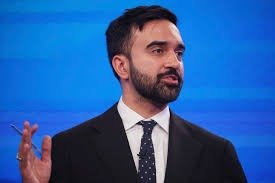
Who is Zohran Mamdani? Early Life
Zohran Mamdani’s politics appear to be informed by an extraordinarily broad worldview, which they most likely are. Who is Zohran Mamdani at his core? He is the son of two amazing people: his father, Mahmood Mamdani, is an Indo-Ugandan professor whose work on postcolonialism is studied in institutions throughout the world, and his mother is Mira Nair, the Indian filmmaker who directed Monsoon Wedding and Salaam Bombay! Growing up with those two parents, first in Kampala and then briefly in Cape Town before moving to New York City at the age of seven, gives you a very different perspective on the world.
He attended the Bronx High School of Science, a public magnet school that has produced more Nobel laureates than most countries, and then went on to study Africana studies at Bowdoin College in Maine, where he graduated in 2014. Before politics, he worked as a housing consultant, assisting New Yorkers in navigating an often severe rental market, and he was a relatively renowned rapper. Both elements, housing insecurity and genuine street-level connection, would eventually become crucial to how he managed his campaign.
From Campaign Manager to Assembly member
Mamdani got his start in electoral politics by working as a campaign manager for Khader El-Yateem and Ross Barkan. In 2020, he ran for the 36th State Assembly District, which includes Astoria and Long Island City, and defeated a five-term incumbent in the Democratic primary, which is typically the only contest that matters in New York City. He held that position until 2025, co-sponsoring hundreds of measures and supporting a fare-free bus trial scheme that became a hallmark of his legislative career.
The mayoral race
When Mamdani launched his mayoral campaign in October 2024, New York’s political elite responded with a courteous shrug. He was polling in the lower single digits. Cuomo, the three-term former governor with a vast war fund, institutional backing from real estate, and name recognition that needed no introduction, was widely seen as the unstoppable winner.
Mamdani’s campaign was a masterpiece in unusual organization. He was everywhere, including influencer livestreams, church, late-night halal vendors outside Zuccotti Park, crashing a Union Square freestyle rap fight, and visiting six Brooklyn nightclubs on a single Saturday night. His team rallied tens of thousands of volunteers and leveraged social media in ways that the old political machine couldn’t fight.
Younger voters, who turned out in unprecedented numbers, boosted his popularity. He won the Democratic primary in June 2025, upsetting Cuomo by 12 percentage points in an upset that shocked the metropolis. In the November general election, with Cuomo running as an independent and Trump personally backing him, Mamdani won with nearly 50% of the vote, leading by around 9 points.

A coalition unlike any before it
What distinguished Mamdani’s alliance was not just its size, but also its composition. Exit polls revealed that he won across racial categories, with white, black, Latino, and Asian voters all supporting him. Voters under 45 preferred him over Cuomo by 43 points. The only significant gap? Jewish voters supported Cuomo by 29 points, reflecting the issue surrounding Mamdani’s vociferous condemnation of Israel’s actions in Gaza, which he repeatedly accompanied with vehement denials of antisemitism.
What Zohran Mamdani Really Wants to Do
Mamdani’s policy agenda is extremely ambitious by any standard. Critics deem it impractical, while advocates believe it vital. In either case, it is specific, which puts it ahead of most political agendas based just on that metric.
Housing and Rental
The heart of his housing policy is a rent freeze for the roughly two million New Yorkers who live in rent-stabilized units. Along with that, he has committed to developing 200,000 units of affordable housing over the next decade, as well as to improving funds for existing public housing, which has long been underfunded and under-maintained. His first executive directives after entering office addressed housing immediately.
Universal Childcare
The statistics around daycare in New York are startling. Center-based care for newborns in the city averaged roughly $26,000 per year in 2025, a 43% increase from 2019. Mamdani’s proposal would make daycare free and universal for all children from six weeks to five years old, building on the pre-K program initiated by Mayor de Blasio. The expected yearly cost is roughly $6 billion, which will be paid by taxing people earning more than $1 million and increasing corporate taxes.
Free Transportation
Perhaps his most well-known transportation proposal: completely abolishing bus fares while significantly increasing service through dedicated bus lanes and automated enforcement. He advocated for a fare-free bus trial program in the assembly and turned riding the bus into a real campaign event, holding news conferences and riding the bus to debates. The “free” component necessitates governmental collaboration, but the “fast” component is primarily within municipal authority.
Key financing mechanism
The majority of Mamdani’s top plans rely on boosting taxes on New Yorkers earning more than $1 million and increasing corporate tax rates. Both require permission from Governor Kathy Hochul and the state legislature, which poses the most significant political challenge to his program.
Minimum Wage and Workers’ Rights
Mamdani advocates for a $30 minimum wage in New York City by 2030. That’s a considerable increase from current levels and one of the more problematic aspects of his agenda among business organizations and centrist Democrats, who are concerned about the impact on small businesses with narrow margins.
The Real Challenges Ahead
There is a significant difference between winning an election on big ideas and actually implementing those ideas into legislation. Mamdani inherited a city with a fragmented political apparatus. Many Albany Democrats stayed out of his primary. Governor Hochul has already pushed back on some of his tax measures. The real estate and business groups, which spent millions attempting to stop him, are not going away.
Then there’s the federal dimension. Before the election, President Trump threatened to withhold funding from New York City and deploy federal immigration enforcement if Mamdani refused to cooperate, a confrontation that appears increasingly likely given Mamdani’s stated commitment to keeping the city a sanctuary for undocumented immigrants.
On public safety, Mamdani had an early test: he returned from a post-wedding vacation in Uganda to find the city grieving the death of a police officer in a Midtown shooting, and he was instantly presented with earlier tweets in which he advocated for police defunding. He’s toned down his comments about the NYPD since then, but the friction between his supporters and the city’s law enforcement community is genuine and unlikely to go away easily.
The stakes, as observers from across the political spectrum have acknowledged, go far beyond New York. If Mamdani’s administration achieves actual gains in affordability and public services, the national progressive wing will have solid proof of concept. If it stumbles, opponents will have a compelling talking point for years.

Frequently Asked Questions
Who is Zohran Mamdani?
Zohran Mamdani is New York City’s 112th mayor, taking office on January 1, 2026. Born in Kampala, Uganda, in 1991 to professor Mahmood Mamdani and director Mira Nair, he relocated to New York City at the age of seven. He formerly represented the 36th State Assembly District in Astoria, Queens, as a democratic socialist and Democratic Socialists of America member. He is the city’s first Muslim mayor, first South Asian mayor, and the youngest mayor in more than a century.
Zohran Mamdani, what party do you belong to?
Mamdani is affiliated with both the Democratic Party and the Democratic Socialists of America (DSA). He has been outspoken about his democratic socialist identification throughout his political career, and he underlined it in his inauguration address.
What are Zohran Mamdani’s main policy proposals?
His major proposals include universal free childcare for children aged six weeks to five years old, a rent freeze on rent-stabilized apartments, a free city bus system with faster service, the construction of 200,000 affordable housing units over a decade, a $30 minimum wage by 2030, and city-operated grocery stores in each borough. Most of these would be paid by increased taxes on the wealthy and businesses.
How did Zohran Mamdani win the NYC mayoral election?
Mamdani initially beat former Governor Andrew Cuomo in the Democratic primary in June 2025 by 12 points, a significant upset. He then won the November 2025 general election with around 50.4% of the vote, defeating Cuomo, who ran as an independent, and Republican Curtis Sliwa. The turnout topped two million votes, the most since 1969. His campaign depended primarily on grassroots organizing, tens of thousands of volunteers, and a strong social media strategy to motivate young voters.
What historical firsts does Zohran Mamdani represent?
Mamdani is New York City’s first Muslim mayor, the first mayor of South Asian heritage, and the first foreign-born mayor since Abraham Beame. At 34, he is the city’s youngest mayor in more than 130 years.
Who are Zohran Mamdani’s parents?
His father is Mahmood Mamdani, a well-known Indo-Ugandan postcolonialist professor, and his mother is Mira Nair, an award-winning Indian director who has directed Monsoon Wedding and Salaam Bombay.
Why Zohran Mamdani is important beyond New York.
What occurs in New York never really stays in New York, especially when the stakes are this high. Mamdani’s ascension reflects something truly novel in American urban politics: a progressive politician who campaigned on a clearly stated socialist program, refused to back down when attacked, formed a multiracial cross-demographic coalition, and won handily. Twice.

 Glen
Glen