 Glen
GlenIntroduction
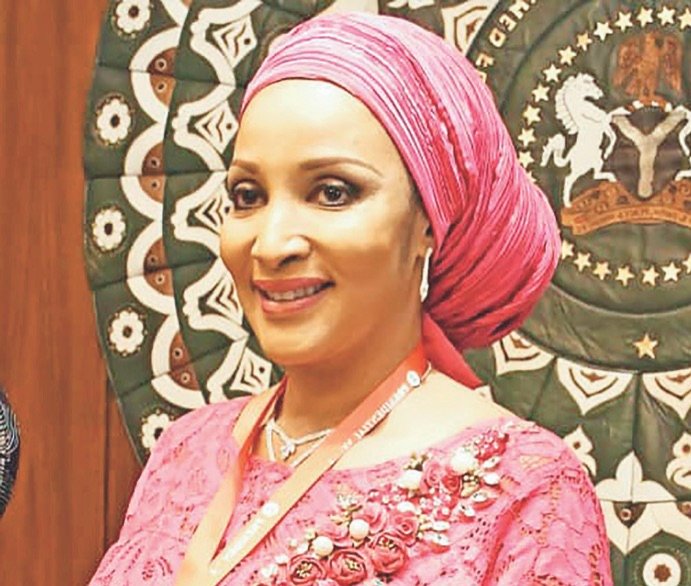
When people search “Who is Bianca Ojukwu?” they typically expect a clear biography. However, Bianca Ojukwu is not a one-dimensional character who can be classified into a single category.
She was a beauty queen who attracted notice when she was younger, a skilled lawyer who was aware of the workings of power, a diplomat who represented Nigeria internationally, and a lady closely associated with one of the nation’s most important historical storylines. What makes her tale intriguing is not simply what she has done, but how she has handled notoriety, impact, and legacy with a calm confidence that is uncommon in public life.
Early Life and Background
Bianca Ojukwu was born into a household that valued influence and leadership in everyday life. Her father, Chief Christian Onoh, was not only politically involved but also played a key role in Enugu State’s political system.
Growing up in such an environment exposed her to the realities of government, power battles, and public responsibilities. Conversations at home most likely extended beyond common issues, exposing her to the mechanics of leadership and decision-making at a young age.
This type of parenting frequently impacts how a person perceives the world in Bianca’s case, it established a foundation of confidence and alertness that would eventually characterize her public persona.
Educational Journey
Her educational background exemplifies both affluence and discipline. Bianca desired achievement rather than simply attending school.
She studied law, which requires accuracy, critical thinking, and good communication abilities. This decision is revealing. It implies an early preference for structure, argument, and influence, rather than merely visibility.
Her experience studying overseas also exposed her to global viewpoints, which helped her mature.
- Cultural sensitivity.
- Diplomatic communication abilities
- A better knowledge of international systems.
Rising to Fame
Bianca Ojukwu rose to prominence through beauty pageants, but it was not for the sake of vanity. Winning titles such as “Most Beautiful Girl in Nigeria (MBGN)” propelled her into the national limelight at a period when pageantry was a prominent cultural outlet. She represented more than simply beauty; she also personified intelligence, poise, and charisma.
Her involvement in international contests such as “Miss World” boosted her profile, establishing her as a global ambassador of Nigerian culture and elegance.
Why Did This Phase Matter?
This period of her life did more than just provide her recognition; it defined her public persona.
Pageantry assisted her:
- Build confidence in high-pressure circumstances.
- Master public speaking and presenting skills.
- Create a network that goes beyond Nigeria.
Marriage to Odumegwu Ojukwu
One of the most talked-about marriages in Nigeria was that of Bianca and Chukwuemeka Odumegwu Ojukwu. Ojukwu was more than simply a popular personality; he was a historical icon, leading Biafra throughout the Nigerian Civil War. Marrying him meant entering a realm rich with political history, emotional weight, and national significance.
Being married to such a person needed more than just emotional devotion; it also demanded strength, adaptation, and awareness.
Bianca needed to:
- Handle continuous media criticism.
- Align personal identity with public expectations.
- Represent a legacy bigger than herself.
After Ojukwu died in 2011, her position did not lessen; rather, it evolved. She became one of his most recognizable heirs, ensuring that his ideas and viewpoints remained part of national discourse.
Career in Law and Diplomacy
Despite being overshadowed by her public image, Bianca’s legal history is an important aspect of her personality.
The law instructed her to
- Think critically and strategically.
- Communicate with clarity and authority.
- Understand the governing structures.
This foundation facilitated her successful transfer into diplomacy. ### Diplomatic Roles
Bianca Ojukwu represented Nigeria in a variety of diplomatic posts, including as ambassador to Spain and Ghana. In these duties, she was not only a ceremonial figure. She aggressively advocated Nigeria’s interests by participating in bilateral negotiations and cultural diplomacy, and her expertise in international negotiations distinguishes her from others. She understood not only how to talk but also when to speak and when quiet was more effective.
Political Influence and Public Engagement
Bianca Ojukwu has never been required to hold political office to maintain her influence. Her voice has significance in talks about national unity, Igbo identity and representation, and historical understanding of Biafra. Despite speaking less frequently than other prominent personalities, her comments have a powerful impact.
Strategic Silence and Selective Voice
One of the most remarkable features of Bianca’s public image is her reserve.
In an era where exposure is sometimes linked with importance, she has adopted a different approach: speak only when required, avoiding unneeded disputes and maintaining a sense of mystery. This has allowed her to maintain credibility and authority over time.
Cultural Importance and Legacy
Bianca Ojukwu’s influence extends beyond her job.
She represents:
- The Evolution of Nigerian Womanhood
- The combination of beauty, intelligence, and power
- A bridge between the past and the present.
For many young women, she exemplifies how identity does not have to be singular—you can be multidimensional and yet have an effect.
Custodian of Ojukwu Legacy
Following her husband’s death, Bianca assumed emotional and historical responsibility.
She continued to display his beliefs in public places, participate in national commemorative activities, and talk about Biafra’s role in history. This function keeps the narrative alive, relevant, and contextualized.
Why Bianca Ojukwu is still relevant today
Bianca Ojukwu’s significance remains consistent in today’s Nigeria, where famous personalities frequently peak and fall in popularity.
She is important because she shows continuity-linking Nigeria’s past (via Ojukwu’s legacy), its present (by her public participation), and its future (by her influence and example). Her tale is more than simply who she is; it is also about what she symbolizes in a larger national context.
Conclusion
Bianca Ojukwu’s life is a study in balance: visibility and solitude, influence and restraint, history and the contemporary. She has negotiated several worlds of beauty, law, diplomacy, and politics while maintaining her sense of self. And perhaps that is the most appealing aspect of her story: she has not attempted to be everything at once. Instead, she has let each stage of her life unfold naturally, leaving a legacy that feels both deliberate and true.


 Glen
Glen