 Glen
GlenIntroduction
A scene in January 1945, in a frozen field near Holtzwihr, France, defines what the term “beyond the call of duty” means in practice. A 19-year-old lieutenant, already wounded, and leading a company that had recently lost practically every officer, saw six German tanks and 250 infantrymen advance on his position. His reinforcements were not arriving. His soldiers had retreated into the woods. The wise and survivable move would have been to follow them. Audie Murphy Biography.
Instead, Audie Murphy climbed aboard a blazing tank destroyer, which might have exploded at any time, seized its .50-caliber machine gun, and engaged the whole approaching army alone for more than an hour. When his ammo ran out, he returned to his troops, refused medical care for his leg injuries, and promptly planned a counterattack.
When asked why he’d done it, he said in four words: “They were killing my friends.” That is who Audie Murphy was. And, as unusual as it was, that was not his first act of incredible heroism; it was only the one that earned him the Medal of Honor.
Who is Audie Murphy?
Audie Leon Murphy was born on June 20, 1925, in Kingston, a tiny rural town in Hunt County, northeastern Texas. He was the seventh of twelve children born to Emmett and Josie Bell Murphy, sharecroppers who lived in abject poverty, shifting between decaying farm cottages when work and weather allowed.
His early years read more like a Depression-era book than a war hero’s genesis narrative. His father finally abandoned the family completely. Audie’s mother died while he was a teenager, leaving him to care for his younger siblings despite having just outgrown childhood himself. He quit school in the fifth grade to pick cotton and perform any farmwork he could find. He was a natural shooter with a hunting rifle and provided for his family by killing rabbits and small wildlife on their farm.
The mix of early adversity, acute intuition, and quiet persistence formed the soldier he became. During World War II, none of his commanding officers forgot the modest youngster from Texas who regularly outperformed everyone’s expectations, frequently exceeding what they believed was possible.
Enlisting
Audie Murphy enrolled in the military ten days after his 17th birthday, in June 1942, motivated by sadness over his mother’s death as well as a sense of patriotic urgency sparked by the assault on Pearl Harbor. He was so desperate to enroll that he changed his birth year to 1924, a discrepancy that remains in his military documents to this day, including his Arlington National Cemetery tombstone.
The Army was the only branch that would accept him. The Marines rejected him because he was underweight. The paratroopers stated the same thing. Murphy got in because the Army’s requirements were more flexible, and he was little, young, and filled with a determination that surpassed his physical stature.
He was initially deployed to North Africa, then Sicily, mainland Italy, and finally southern France. By the time he fought in the Colmar Pocket in early 1945, he had been in constant action for five major operations spanning two and a half years. He received a combat commission in October 1944, ascending from private to lieutenant by proven leadership that no officer school could teach. He had already been injured. More than once. None of this had slowed him down.
Combat Record
The Audie Murphy fighting biography is, by any standard, amazing. His decorations include every significant award attainable to a U.S. Army man, with commendation from France and Belgium for his exploits in their country.
The Major Campaigns
- North Africa was his first operational area, and fighting changed a raw recruit into a combat veteran virtually overnight.
- The amphibious assault landing in Sicily was one of the most perilous actions of the whole Italian war.
- Italy (Anzio), including a February 1944 incident in which Murphy sneaked 100 yards across open territory under fire to destroy a German tank with rifle grenades, earning a Bronze Star.
- Southern France, including his Distinguished Service Cross, fighting at Ramatuelle with the August 1944 invasion.
- Germany, including the decisive Colmar Pocket combat that earned him the Medal of Honor.
Medal of Honor Action
The official Medal of Honor citation portrays the scenario with military precision, but even without exaggeration, the narrative is stunning.
Murphy’s Company B was attacked by six tanks and waves of German infantrymen. He instructed his soldiers to retreat to the tree line while he stayed at his front command post, directing artillery fire via telephone. Murphy went on top of a nearby tank destroyer and manned its .50-caliber machine gun when it received a direct hit and began to burn, with its surviving crew fleeing.
The Full Medal List
Audie Murphy won every US military combat heroism honor available from the Army. His whole list contains:
- Medal of Honor is the nation’s highest military honor.
- Distinguished Service Cross
- Silver Star (twice awarded).
- Legion of Merit
- Bronze Star with Combat “V” (Twice awarded)
- Purple Heart (three times bestowed, for three distinct wounds)
- French Légion d’honneur (Chevalier grade).
- French Croix de Guerre (twice with Palm)
- Belgian Croix de Guerre
Audie Murphy received 33 military medals and decorations from the United States, as well as accolades from France and Belgium for his service in their countries. He is largely regarded as the most decorated American combat soldier of WWII and the most decorated enlisted man in US history.
From the Battlefield to Hollywood
In June 1945, Murphy returned home. The country greeted him with parades, and his visage was on the cover of Life magazine, transforming the second act of his life forever.
Actor James Cagney spotted the cover and tracked down Murphy, inviting him to Hollywood in September 1945. Murphy was doubtful. He was also, as it turned out, a combat hero with no civilian skills, no funds, and no specific strategy. The first couple of years in Los Angeles were very difficult. He slept in a gym locker room once while waiting for anything to break through.
Building a Film Career
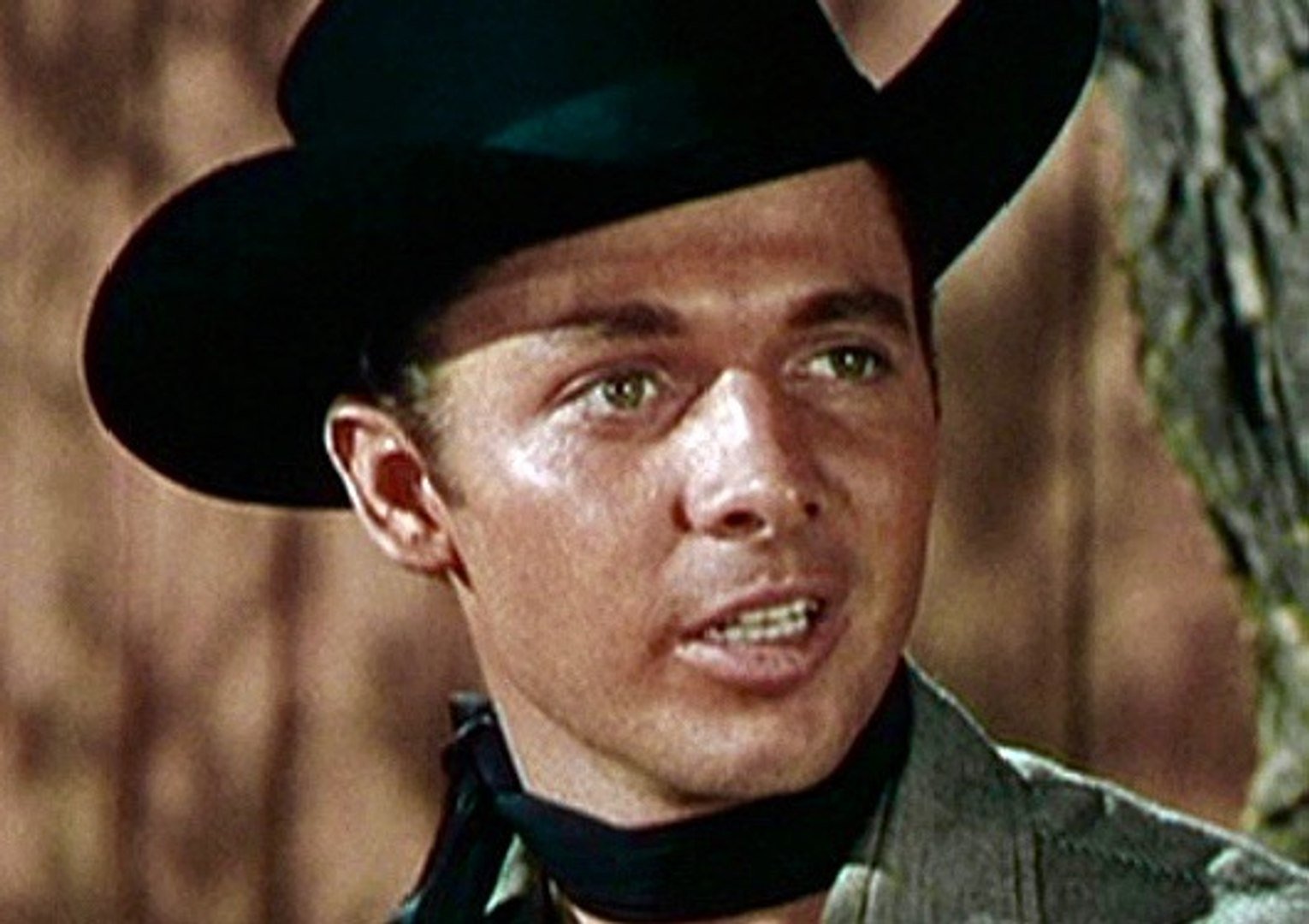
Murphy’s first leading role occurred in 1949’s Bad Boy, an Allied Artists film. In 1950, he signed a 15-year contract with Universal-International, resulting in 26 pictures, 23 of which were Westerns. He carved himself a place in the genre that matched both his demeanor and the tastes of the public at the time: slender, silent, morally uncompromising frontiersmen. In some respects, it wasn’t such a reach.
His two most important films were:
- The Red Badge of Courage (1951), directed by John Huston and based on Stephen Crane’s Civil War novel, is still recognized as Murphy’s most significant acting effort.
- To Hell and Back (1955) is a cinematic version of Murphy’s 1949 memoir in which he plays himself and recreates his wartime adventures on screen. It became Universal’s highest-grossing film to that moment, and it kept the record for decades until Jaws
Audie Murphy featured in 44 films and television projects from 1948 to 1969. He was a true box-office star in the 1950s, but his career transitioned progressively to B westerns and lower-budget pictures in the 1960s as audience preferences changed.
Death and Legacy
On May 28, 1971, Memorial Day weekend, Audie Murphy boarded a private jet in Atlanta heading for Martinsville, Virginia. He was 45 years old, and his life was complicated: financially challenged, still dealing with previous traumas, yet well regarded and advocating for veterans.
Flying in fog and rain, the jet crashed into Brush Mountain near Roanoke, Virginia. All six passengers on board were killed. Murphy’s corpse was retrieved on May 31st.
On June 7, 1971, he was buried with full military honors in Arlington National Cemetery. At his own previous desire, his gravestone is modest and unassuming, with no gold leaf, as is customary for Medal of Honor recipients and identical to the monuments of the regular troops buried near him. That request reveals something about the individual. He never thought he was more important than the others who fought with him. His burial is the second most visited at Arlington, after only President Kennedy’s.
FAQ: Audie Murphy
Q1. Who is Audie Murphy? Audie Leon Murphy (June 20, 1925–May 28, 1971) was an American soldier, actor, and songwriter widely regarded as the most decorated American combat soldier of World War II. Born into poverty in rural Texas, he rose through the Army to earn 33 US military medals, including the Medal of Honor, before building a successful Hollywood film career.
Q2: How many medals has Audie Murphy received? Murphy was awarded 33 U.S. military medals, including the Medal of Honor, Distinguished Service Cross, two Silver Stars, Legion of Merit, two Bronze Stars with Combat “V” device, and three Purple Hearts. He was also awarded French and Belgian military decorations for his activities in Europe.
Q3: How did Audie Murphy win the Medal of Honor? On January 26, 1945, in Holtzwihr, France, Murphy single-handedly fought off a company of German soldiers, six tanks, and around 250 infantry for more than an hour while standing on a burning tank destroyer that was about to explode. He was injured during the conflict but rejected medical attention, instead leading a victorious counterattack. He was nineteen years old at the time.
Q4: How many movies has Audie Murphy made? Murphy featured in 44 films and television shows between 1948 and 1969. His most well-known films were To Hell and Back (1955), in which he portrayed himself, and The Red Badge of Courage (1951), directed by John Huston.
Q5. How did Audie Murphy die? Murphy died on May 28, 1971, when his own jet crashed into Brush Mountain outside Roanoke, Virginia, in hazy, wet weather. All six passengers were slain. He was 45 years old.
Conclusion
The Audie Murphy narrative does not end nicely. It does not conclude with financial stability, a peaceful retirement, or a last chapter of ease. It concludes with an aircraft crashing in fog on a Virginia mountain during Memorial Day weekend, transporting a 45-year-old man who had spent most of his adult life fighting both internal and external warfare.
Did you find this article worthwhile to read? Share it with someone who thinks they know the whole story, and leave a comment: which element of Audie Murphy’s life do you believe needs more attention than it now receives?

 Glen
Glen