 Glen
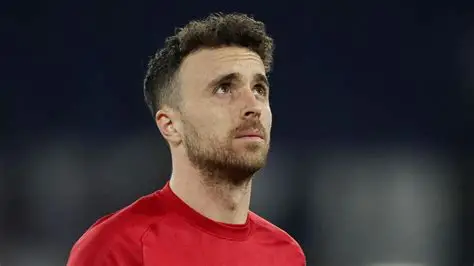
GlenDiogo José Teixeira da Silva, commonly known as Diogo Jota, was a Portuguese professional footballer who played as a forward and winger. He was born on 4 December 1996 in Porto, Portugal, and grew up in the nearby municipality of Gondomar in the Porto metropolitan area. Jota represented Portugal at the international level and enjoyed a successful club career in Portugal and England, notably with Liverpool.
His journey from humble beginnings in a working-class family to becoming a Premier League champion and key contributor for the Portuguese national team exemplified dedication, versatility, and resilience. Jota’s career ended tragically on 3 July 2025 when he and his brother André Silva died in a car accident in Cernadilla, Spain, at the age of 28. His legacy endures through his goals, work ethic, and impact on fans and teammates.
Diogo Jota Early Life and Background
Diogo José Teixeira da Silva entered the world on 4 December 1996 at the Maternidade Júlio Dinis in Porto, Portugal. His parents, Joaquim Silva and Isabel Silva, raised him and his younger brother André in Gondomar, a municipality in the Porto metropolitan area known for its working-class roots. The family originated from the northern region of Portugal, with humble backgrounds tied to everyday labor and local sports traditions.
Jota’s father worked for a crane company, and his mother was employed in a factory producing electronic components for automobiles. Both parents supported the family’s needs through hard work, and football ran in the family, Jota’s father and grandfather had played at semi-professional levels for local sides like UD Sousense. This environment nurtured Diogo’s early passion for the game.
Football Career
From a young age, Diogo showed an intense love for football. He spent much of his free time in his grandmother’s small backyard in São Cosme, Gondomar, kicking a ball and accidentally breaking many flower pots and plants. The yard measured only about three meters by fifteen, yet it became the first pitch where his skills developed. His parents encouraged sports for physical and mental growth, but Diogo often cried when taken to swimming lessons instead of football training, demonstrating his single-minded focus on the ball.
At around age seven, he joined the youth setup at Gondomar Sport Clube, his local club. There, he progressed through the ranks while attending primary school in Aguiar de São Cosme. Coaches noted his maturity, technical ability, and ability to make a difference in matches even as a young boy. Despite his smaller stature, he stood out with his movement and determination. The family made sacrifices to support his involvement, paying monthly fees for him to play, as Gondomar was a small club without the resources of bigger academies.
Jota’s state of origin is firmly rooted in the Porto district of northern Portugal. Gondomar provided a grounded upbringing far from the spotlight of major clubs. He remained loyal to his local area, often returning even after achieving fame. The community later honored him with an academy named after him, reflecting his status as a local hero who never forgot his origins.
Diogo Jota Education
Diogo Jota balanced his football ambitions with academics successfully. He attended primary school in Aguiar de São Cosme and secondary school in Gondomar. Teachers and family members described him as an excellent student who achieved good grades, often in the 14s and 15s (on a 0-20 scale common in Portugal), without needing extensive home study. He paid attention in class and prepared efficiently for exams.
His parents emphasized education as a priority alongside football, requiring strong performance in school for continued support in sports. Even as he moved to Paços de Ferreira’s youth setup at age 16, Jota completed his secondary education there while adapting to life away from home. He lived in club accommodations, handled daily responsibilities, and obtained his driver’s license during this period.
This discipline in education mirrored his approach to football. Jota remained focused and mature, avoiding distractions. His ability to excel academically without heavy extra effort highlighted his intelligence and time management, qualities that later benefited his professional career. He did not pursue higher education, as football became his full-time path, but the foundation of discipline from school served him well throughout life.
Diogo Jota Youth Career
Diogo Jota’s youth career began at Gondomar Sport Clube around 2005, where he stayed until 2013. Starting as a left midfielder to improve his weaker foot, he evolved into an offensive midfielder and eventually a forward or winger. Coaches praised his ability to “unlock” difficult games with skill and vision. Despite interest from some clubs, larger Portuguese sides like Porto, Benfica, and Sporting overlooked him initially due to his physique.
In 2013, at age 16, he joined Paços de Ferreira’s youth academy. This move marked a significant step, about 40 kilometers from home. He adapted quickly, living in club housing and progressing rapidly. By the 2014-15 season, he made his senior debut while still contributing at youth levels. His time at Paços helped him develop physically and tactically, building the versatility that defined his later career.
Diogo Jota Senior Club Career
Diogo Jota Time at Paços de Ferreira
Jota made his professional debut for Paços de Ferreira in the Primeira Liga during the 2014-15 season. He scored his first senior goal in the Taça de Portugal and impressed with 14 league goals over two seasons. His performances attracted attention from bigger clubs, leading to a transfer to Atlético Madrid in 2016, though he never played for their senior team.
Diogo Jota Loan Spells and Breakthrough
After joining Atlético Madrid, Jota returned to Portugal on loan at Porto for the 2016-17 season. He scored eight league goals and gained valuable European experience. The following season, he moved on loan to Wolverhampton Wanderers in England’s Championship, where he thrived with 17 goals, helping the team secure promotion to the Premier League.
Diogo Jota Success at Wolverhampton Wanderers
Wolves made the move permanent in 2018 for around €14 million. Jota became a key player, scoring consistently in the Premier League and contributing in Europe. Over his time there, he made 131 appearances and scored 44 goals, establishing himself as a reliable attacker known for pace, finishing, and work rate.
Diogo Jota Liverpool Era
In September 2020, Liverpool signed Jota for a reported £41 million. He quickly adapted under manager Jürgen Klopp, scoring on debut and becoming a fan favorite. Over five seasons, he made 182 appearances and scored 65 goals across all competitions. He contributed to major successes, including the 2024-25 Premier League title, an FA Cup, and two EFL Cups. His versatility allowed him to play as a striker, winger, or false 9, often delivering crucial goals.
Injuries occasionally limited him, but Jota’s pressing intensity and clinical finishing made him valuable. Under new manager Arne Slot, he continued to shine in the title-winning campaign. His number 20 shirt was later retired by the club in his honor.
Diogo Jota Playing Style and Strengths
Diogo Jota was a versatile forward with excellent finishing, explosive pace, dribbling, and intelligent movement. Primarily right-footed but strong with both, he excelled in counter-attacks and close control. Despite his height of 1.78 meters, he was effective in the air and contributed defensively with high work rates, often described as a “pressing monster.”
His positional awareness allowed seamless shifts across the front line. Fans and analysts praised his composure in front of goal and ability to decide matches. These traits made him effective in high-pressing systems like Liverpool’s and suited international play.
Diogo Jota International Career
Jota represented Portugal at various youth levels before debuting for the senior team in November 2019. He earned 49 caps and scored 14 goals. Key moments included goals in the UEFA Nations League, where Portugal won titles in 2019 and 2025. He participated in UEFA European Championships in 2020 and 2024.
His international contributions highlighted his big-game mentality, with his final appearance coming in the 2025 Nations League final.
Diogo Jota Achievements and Awards
Diogo Jota accumulated several honors. With Wolverhampton Wanderers, he won the EFL Championship in 2017-18. At Liverpool, he secured the Premier League in 2024-25, the FA Cup in 2021-22, two EFL Cups (2021-22 and 2023-24), and the FA Community Shield in 2022.
Internationally, he claimed two UEFA Nations League titles with Portugal (2019 and 2025). Individual recognition included monthly awards and posthumous honors, such as the retirement of his Liverpool number 20.
Diogo Jota Personal Life
Diogo Jota maintained a grounded personal life. He met his partner Rute Cardoso in secondary school around 2012-2013. They married on 22 June 2025, shortly before the tragedy. The couple had three children: sons Dinis (born 2021) and Duarte (born 2023), and a daughter (born 2024). Family remained central, and Jota often spoke of the joy his children brought him.
He was known for humility, avoiding extravagant lifestyles. Jota stayed connected to Gondomar and supported local initiatives. An avid gamer, he achieved world number one ranking in a FIFA video game edition, blending his real and virtual football talents.
Diogo Jota Legacy and Impact
Jota’s legacy extends beyond statistics. From a small-town boy paying to play football to a Premier League champion, he inspired many with his work ethic and humility. Liverpool fans chanted about the “lad from Portugal,” comparing him favorably to legends. Tributes after his passing highlighted his character as much as his skills, described as a manager’s dream, friend to many, and devoted family man.
Clubs, teammates like Cristiano Ronaldo, managers Jürgen Klopp and Arne Slot, and fans worldwide mourned his loss. Memorials, including a sculpture at Anfield and tributes in Gondomar, ensure his memory lives on. His story reminds aspiring players that perseverance and roots matter.
Read More: Alicia Kanini Biography, Age, Net Worth, Education, Husband and Family Background
Diogo Jota Tragic Passing
On 3 July 2025, Diogo Jota and his brother André died in a car accident in Spain while driving back to England after recent events, following medical advice not to fly post-surgery. The incident involved a tyre blowout, leading to the vehicle leaving the road and catching fire. The football world united in grief, with widespread tributes emphasizing the sudden loss of a young talent and family man.
Conclusion
Diogo Jota’s life, though cut short, was one of remarkable achievement and quiet strength. From the backyards of Gondomar to the lights of Anfield, he embodied dedication and versatility. His goals, titles, and personal qualities left an indelible mark on football and those who knew him. Jota will be remembered as a champion, a family man, and an inspiration whose journey continues to resonate.
FAQs
What was Diogo Jota’s full name and date of birth?
Diogo José Teixeira da Silva was born on 4 December 1996.
Where was Diogo Jota from and what was his nationality?
He was born in Porto, Portugal, and grew up in Gondomar. He held Portuguese nationality.
Which clubs did Diogo Jota play for in his career?
He played for Paços de Ferreira, Porto (loan), Wolverhampton Wanderers, and Liverpool.
What major trophies did Diogo Jota win?
He won the Premier League, FA Cup, EFL Cups, Championship, and two UEFA Nations League titles.
What was Diogo Jota known for in his playing style?
He was known for versatility, clinical finishing, pace, dribbling, and high work rate.
How many goals did Diogo Jota score for Liverpool?
He scored 65 goals in 182 appearances for Liverpool.
What happened to Diogo Jota in 2025?
He tragically passed away in a car accident on 3 July 2025 along with his brother André.
Did Diogo Jota have a family?
Yes, he was married to Rute Cardoso and had three children.


 Glen
Glen