 Glen
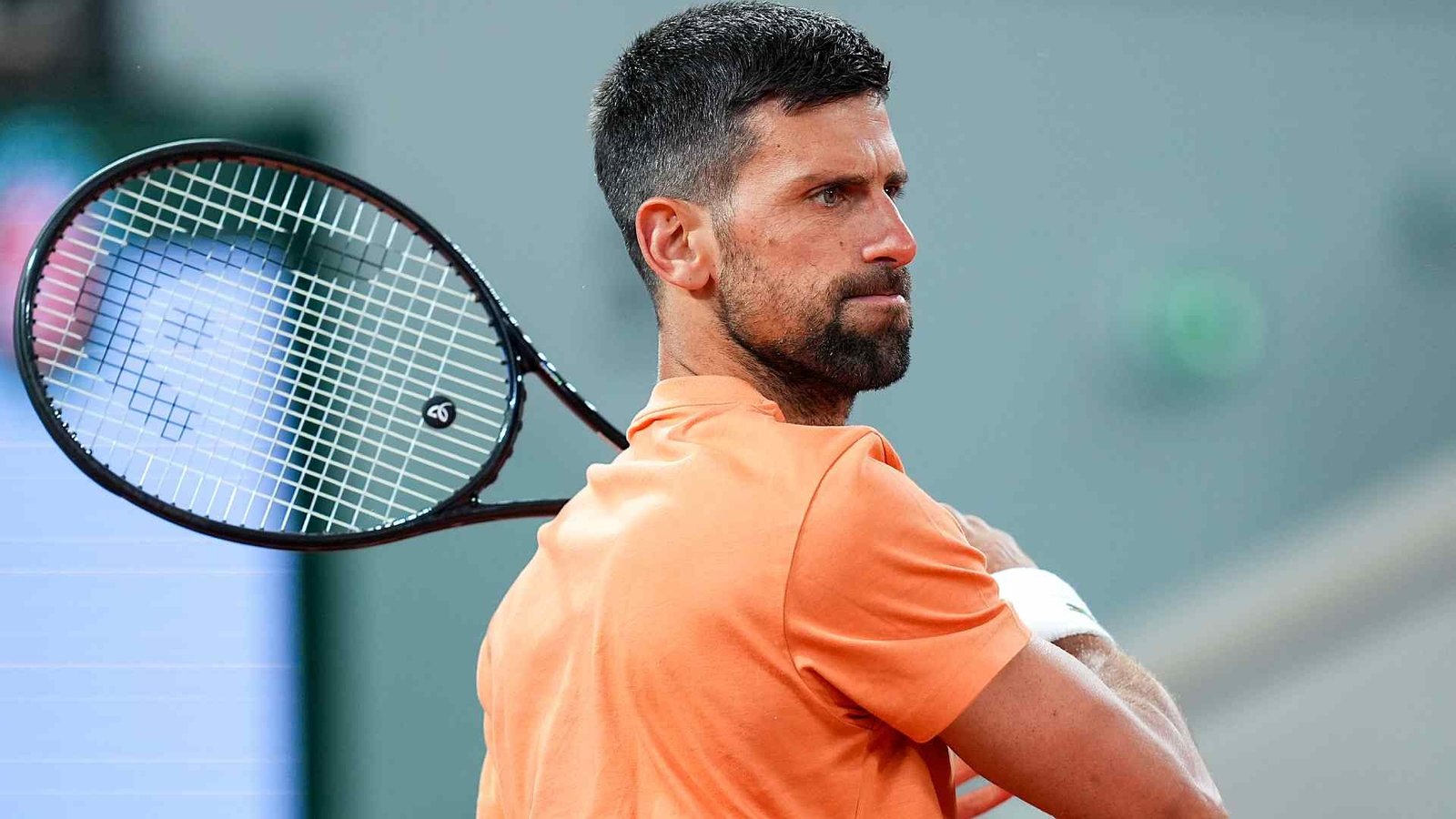
GlenFor most of the 2010s, a significant portion of the tennis-watching world spent considerable energy hoping that Novak Djokovic would lose. To Federer. To Nadal. To anyone, really, who wasn’t Djokovic. There was something about him, the grunting, the confidence, the way he seemed to stretch the laws of physics with his movement, that made neutrals reach for the opposition.
Here is the irony: by rooting against him, they were rooting against the most accomplished player in the sport’s recorded history. And they did it for a decade.
Who is Novak Djokovic in 2026? He is 38 years old, ranked in the top ten, preparing for Roland Garros with a new coach, 24 Grand Slam titles in the bank, an Olympic gold finally claimed in Paris, and a 2025 season that saw him become, at 38, the oldest man in Open Era history to reach the semi-finals of all four majors in a single year. He is also still the only credible answer to the question of who is the greatest male tennis player of all time.
Who Is Novak Djokovic?
Before the story, the numbers because with Djokovic, the numbers are almost incomprehensible without context.
Novak Djokovic is a Serbian professional tennis player, born May 22, 1987, in Belgrade. He holds the all-time men’s record for:
- 24 Grand Slam singles titles — 10 Australian Opens, 7 Wimbledons, 4 US Opens, 3 French Opens
- 428 weeks at World No. 1 — the most of any player in history, men’s or women’s
- 40 ATP Masters 1000 titles — a record
- 101 career ATP titles — currently two behind Roger Federer’s record of 103
- 192 hard-court Grand Slam wins — surpassing Roger Federer’s record at the 2025 US Open
- Olympic gold medal — Paris 2024, defeating Carlos Alcaraz, completing the Career Golden Slam
Early Life
Here is the part of the Novak Djokovic biography that should silence every lazy narrative about his supposed advantages. He did not grow up in Switzerland or Spain. He grew up in Serbia, specifically in Belgrade, in the 1990s, during one of the most turbulent decades in European history.
He was born to Srđan Đoković, a former skier who ran a sports equipment shop, and Dijana Đoković, a physical therapist. The family ran a McDonald’s franchise for a period to generate income. His two younger brothers, Marko and Đorđe, grew up in the same household.
The detail that matters most: as a child, Novak Djokovic trained in a converted swimming pool. Not a converted court, but a swimming pool with an inadequate surface and whatever equipment could be managed. And the training sessions sometimes happened during NATO bombing raids on Belgrade in 1999, when the 12-year-old would hear the sirens and continue practicing because stopping was not, apparently, the Serbian way.
His coach from age six was Jelena Genčić, a woman who had also coached Monica Seles, who immediately recognized something extraordinary. She called him a “golden child” and pushed him with the rigor his talent demanded. By 12, he had been identified by Nikola Pilić as a future world number one and sent to train at his academy in Munich.
The Formation of a Playing Style
Djokovic’s game is unlike any other in the Open Era, and that distinctiveness was built, not given. He is a baseliner who serves as a weapon, returns serve better than anyone who has ever played the game, and moves with a flexibility that coaches still cannot fully explain in biomechanical terms. His two-handed backhand is widely regarded as the best single shot in modern men’s tennis. His ability to retrieve balls that should be winners is routinely described by opponents as demoralizing.
He is left-handed when eating and writing. He plays right-handed. He is one of three naturally ambidextrous players at an elite level in the sport’s history.
The Career Arc
Breaking Through (2003–2007)
He won his first ATP title in 2006 in Amersfoort. By the end of 2007, he had won three Slams no, wait: he had reached the Australian Open semi-final in 2007, won no Slam yet, but earned a ranking that put him third in the world. The breakthrough was happening in real time. Anyone watching could see it.
Cracking the Code (2008–2010)
His first Grand Slam came at the 2008 Australian Open. He beat Jo-Wilfried Tsonga in the final. He also won a bronze medal at Beijing 2008. But the period between 2008 and 2011 was genuinely difficult, playing in the shadow of Federer and Nadal’s dominance, losing key matches, and being seen as the third man in a two-man era.
He responded by changing everything.
The 2011 Season
In 2011, Novak Djokovic had one of the greatest single seasons in the history of professional tennis. He won 10 titles, including three Grand Slams: the Australian Open, Wimbledon, and the US Open. His record for the year was 70 wins and 6 losses. He won 43 consecutive matches at one point. He ended Federer’s dominance at Wimbledon and ended Nadal’s US Open supremacy in the same calendar year.
That season should have definitely settled the GOAT conversation. It didn’t partly because Federer and Nadal had history and partly because European tennis audiences had loyalties that a Serbian outsider would always struggle to override.
He won the French Open for the first time in 2016, completing the Career Grand Slam. He added a second in 2021 and a third in 2023.
The Records
The Novak Djokovic record book is, at this point, almost beyond challenge. A brief tour:
- 10 Australian Open titles — an absurd individual domination of a single Slam. No one else in the Open Era is close.
- 7 Wimbledon titles — equalling Pete Sampras and William Renshaw’s men’s records and two behind Federer’s eight (which he nearly matched in 2025)
- 4 US Open titles — alongside Roy Emerson, Rod Laver, Rafael Nadal, and other legends
- 3 French Open titles — on the most physically demanding surface in tennis, at a tournament where Nadal’s 14 titles seemed to make everyone else irrelevant
- 428 weeks at No. 1 — that’s over eight years, in a sport where the average No. 1 tenure lasts months, not years
- The Golden Slam — completed at Paris 2024, defeating Alcaraz in an emotional final that brought Djokovic to tears in a way that rarely happens to men who had won 23 Grand Slams
The 2024 Olympic Gold
The Paris 2024 Olympic gold deserves its own paragraph. Djokovic had previously finished second and third at the Olympics; the Olympic gold was the one significant prize missing from his cabinet. He played through a knee injury that had required surgery weeks earlier, defeated each opponent in turn, and faced Alcaraz, the heir apparent, 16 years his junior, in the final. He won in two sets.
In the post-match interview, he cried. Djokovic, who has been accused throughout his career of emotional coldness and robotic professionalism, sat at courtside and wept openly. He has called the Paris 2024 gold the greatest achievement of his career.
The 2025 Season
The Novak Djokovic 2025 biography update defies what most sports observers expected from a 38-year-old who had endured significant injury setbacks in 2024.
- He reached the semi-finals of all four Grand Slams in 2025 — Australian Open, Roland Garros, Wimbledon, and the US Open — becoming the oldest man in Open Era history to achieve this in a single season
- He won two ATP titles in 2025, bringing his career total to 101 — two behind Federer’s men’s record of 103
- At the 2025 US Open, he recorded his 192nd career win at a hard-court Grand Slam, breaking Roger Federer’s record in that category
- His 2025 season record at majors was 20 wins and 4 losses, up from 16-3 in 2024
- He appointed Viktor Troicki as a coach in May 2026, reshaping his team ahead of Roland Garros and what could be a run at a record 25th Grand Slam title
He did not win a Slam in 2025. He reached the final four of all four, losing to Sinner twice, Zverev once (retiring injured), and Alcaraz once. At 38. Against three players a decade younger than him.
Beyond Tennis
Novak Djokovic Foundation
Since 2007, he has run the Novak Djokovic Foundation, focused on early childhood education and development in Serbia. The foundation has built or renovated over 50 schools and supported more than 20,800 children, a philanthropic commitment that receives a fraction of the media coverage his on-court achievements command but represents genuine, documented impact.
Djokovic the Person
The Novak Djokovic biography would be incomplete without acknowledging the genuine complexity of the public figure. He is an advocate for alternative health approaches that have attracted significant criticism, including his public vaccine skepticism, which resulted in his deportation from Australia ahead of the 2022 Australian Open. He was unable to compete and forfeited the title’s defense.
He is a devoted family man married since 2014 to Jelena Ristić, with whom he has two children, Stefan (born 2014) and Tara (born 2017). He has spoken about their grounding influence on a career that could easily become all-consuming.
He practices meditation. He follows a strict gluten-free diet that he credits with transforming his physical resilience in the 2010s. He is an admirer of Nikola Tesla and has spoken in interviews about spirituality and consciousness in ways that confound the image of the calculating tennis machine.
He is also, as anyone who has watched him closely over the years will attest, deeply funny, a mime artist of professional-grade ability, known for his impressions of fellow players, and possessed of a warmth in personal interactions that his on-court intensity completely conceals.
Key Timeline: Novak Djokovic Biography
- May 22, 1987 — Born in Belgrade, Serbia
- 1993 — Begins tennis training at age 6 under coach Jelena Genčić
- 1999 — Continues training in converted swimming pool during NATO bombing raids
- 2003 — Turns professional
- 2004 — Wins French Open junior title
- 2006 — Wins first ATP title (Amersfoort)
- 2008 — Wins first Grand Slam (Australian Open); bronze medal at Beijing Olympics
- 2011 — Historic season: 70-6 record, 3 Grand Slams, 43-match win streak
- 2012 — Australian Open title after 5h 53m final — longest Slam final in Open Era
- 2016 — Completes Career Grand Slam with first Roland Garros title; holds all four Slams simultaneously
- 2021 — Wins all three Slams he enters; loses Olympic gold in Tokyo in bronze medal match
- 2022 — Deported from Australia over vaccination status; misses Australian Open and US Open
- 2023 — Wins Australian Open, Roland Garros, US Open; wins Wimbledon final but loses to Alcaraz
- August 2024 — Wins Olympic gold at Paris 2024, defeating Alcaraz; completes Career Golden Slam
- 2025 — Reaches semi-finals of all four Slams (the oldest man in Open Era history to do so in one season); wins two titles; career total reaches 101; breaks Federer’s hard-court Grand Slam wins record
- 2026 — Preparing for Roland Garros under new coach Viktor Troicki; chasing 25th Grand Slam
FAQs: Novak Djokovic
Q1: Who is Novak Djokovic? Novak Djokovic (born May 22, 1987, in Belgrade, Serbia) is a Serbian professional tennis player, widely regarded as the greatest male tennis player of all time. He holds the all-time men’s record for Grand Slam singles titles (24), weeks at World No. 1 (428), and ATP Masters 1000 titles (40).
Q2: How many Grand Slam titles does Novak Djokovic have? Djokovic has won 24 Grand Slam singles titles: 10 Australian Opens, 7 Wimbledons, 4 US Opens, and 3 French Opens, the most Grand Slam titles in men’s tennis history.
Q3: Has Novak Djokovic won the Olympic gold medal? Yes. Djokovic won his first Olympic gold medal at the Paris 2024 Games, defeating Carlos Alcaraz in the final. The win completed his career Golden Slam, all four majors plus an Olympic gold, making him one of only four players in history (men’s or women’s) to achieve this.
Q4: How long has Novak Djokovic been ranked No. 1? Djokovic has spent a record 428 weeks as the ATP World No. 1, more than any player in the history of men’s or women’s professional tennis.
Q5: How has Djokovic performed in 2025? In 2025, at age 38, Djokovic reached the semi-finals of all four Grand Slams, becoming the oldest man in Open Era history to achieve this in a single season. He won two ATP titles, bringing his career total to 101, and broke Roger Federer’s record for most career wins at hard-court Grand Slams (192) at the 2025 US Open.
Q6: What is the Novak Djokovic Foundation? The Novak Djokovic Foundation is a philanthropic organization founded by Djokovic in 2007, focused on early childhood education and development in Serbia. It has built or renovated over 50 schools and supported more than 20,800 children.
Q7: Why was Novak Djokovic deported from Australia in 2022? In January 2022, Djokovic was deported from Australia after the Australian government cancelled his visa over his COVID-19 vaccination status. He was unable to defend his Australian Open title. He has been publicly skeptical of vaccine mandates and has declined to disclose his full vaccination history.
Q8: Who is Novak Djokovic’s wife? Djokovic is married to Jelena Ristić, a businesswoman and education activist whom he met as a teenager in Serbia. They married in 2014 and have two children: Stefan (born 2014) and Tara (born 2017). Jelena is closely involved in the Novak Djokovic Foundation.
Q9: How many career ATP titles does Djokovic have? As of the end of 2025, Novak Djokovic has won 101 career ATP titles, two behind Roger Federer’s men’s record of 103.
Conclusion
Here is the uncomfortable truth about the Novak Djokovic GOAT debate: it was never really a debate about tennis. It was a debate about aesthetics, nostalgia, and the stories we decide to tell about athletes before the evidence is in.
The evidence is in: 24 Grand Slams, 428 weeks at No. 1, and an Olympic gold. A 2025 season that was, in raw terms, more successful than most players have their entire careers. A record-breaking semi-final at the US Open at 38 years old. A 192nd hard-court Slam win that surpassed the man most people spent a decade preferring.

 Glen
Glen