 Glen
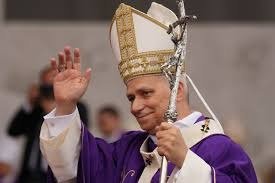
GlenWhite smoke rose from the tower of the Sistine Chapel on the evening of May 8, 2025, after only two days of discussions, which is very quick for a modern assembly. A senior cardinal deacon came onto the balcony of St. Peter’s Basilica and proclaimed a name never previously declared by a conclave in two millennia of Catholic history: an American.
Cardinal Robert Francis Prevost of Chicago has been chosen as the 267th Bishop of Rome. He selected the name, Leo XIV.
For all the conjecture that had permeated Vatican hallways in the weeks following Pope Francis’ death on April 21, 2025, Prevost was not one of the few candidates who topped every shortlist. Nonetheless, when the cardinals assembled, 133 of them, the great majority nominated by Francis himself, arrived at an unusually swift and unanimous conclusion. A Chicago-based missionary who had spent nearly three decades in Peru. A guy fluent in five languages who spoke nothing in English at his first address as pope.
That detail, the purposeful decision to commence his pontificate in Italian and Spanish rather than his own language, revealed important information about Pope Leo XIV and the type of papacy he intended to govern.
Who Is Pope Leo XIV?
Pope Leo XIV, born Robert Francis Prevost on September 14, 1955, in Chicago, Illinois, is the Roman Catholic Church’s first American pope and the first leader of the Augustinian religious order. He is also a naturalized Peruvian citizen, which helped persuade skeptical cardinal electors that, despite his American passport, his instincts and priorities are really worldwide.
He worked as a missionary in Peru from 1985 to 1986, then again from 1988 to 1998. He was the bishop of Chiclayo, Peru, from 2015 until 2023. He was the Superior General of the Order of Saint Augustine from 2001 to 2013. And in January 2023, Pope Francis summoned him to Rome to serve as Prefect of the Dicastery for Bishops, one of the most important positions in the Vatican, responsible for assessing and proposing candidates for bishop assignments worldwide. Pope Francis named him a cardinal on September 30, 2023. Less than two years later, he became Pope.
Early Life
Born in Chicago on September 14, 1955, Robert Francis Prevost is the son of Louis Marius Prevost and Mildred Martínez. His father is a United States citizen. He was a Navy veteran of WWII and a school administrator of French and Italian origin. His mother, a librarian, was of Spanish heritage. He has two brothers.
The family resided in Dolton, Illinois, a modest, working-class town south of Chicago. Childhood neighbors recall the Prevosts as very religious. His mother and father were both quite involved in their parish, and young Robert was an altar boy at St. Mary of the Assumption Church on Chicago’s far South Side.
That parish creation was not coincidental. In many Catholic households at the time, altar service was more of an entrance into the rhythms of liturgical life than a necessity. For Robert Prevost, it seemed to have stayed.
In 1973, he finished secondary studies at the Order of St. Augustine’s minor seminary. Then, in what appears to be an uncommon academic detour for a future priest, he got a Bachelor of Science degree in mathematics from Villanova University in 1977.

The Languages That Would Define His Ministry
Pope Leo XIV speaks English, Spanish, Italian, French, and Portuguese, as well as Latin and German, for a total of seven languages. That language diversity was not by chance for a man who would spend decades traveling between Chicago, Rome, Peru, and the worldwide Catholic hierarchy. It served as the framework for anything he might do.
Joining the Augustinians
In 1977, Prevost entered the Order of St. Augustine, a religious community formed in the tradition of Saint Augustine of Hippo, a fourth-century theologian whose works on grace, community, and the inner life are still considered among the most significant in Christian history. He made his solemn vows in 1981 and was ordained as a priest on June 19, 1982.
The motto he held as Bishop of Chiclayo, and which he preserved as Pope, is directly derived from Augustine: “In Illo uno unum,” which means that, while there are many Christians, we are all one in Christ. It is a unification slogan, emphasizing the importance of collective affiliation above individuality. According to those who are familiar with it, Leo XIV maintained it on purpose.
Following ordination, he earned a PhD in canon law from Rome’s Pontifical College of Saint Thomas Aquinas. He then visited Peru for the first time in 1985.
The Peru Years
This is the portion of Pope Leo XIV’s history that most influenced the pope who stood on the balcony in May 2025. He spent the majority of three decades in Peru, first as a parish priest in Trujillo, then as a teacher and administrator at the Augustinian seminary, and last as bishop of Chiclayo.
Peru in the 1980s and 1990s was a country under remarkable stress: the Sendero Luminoso insurgency, economic collapse, a government engaged in ruthless counterinsurgency, and communities, many of whom were indigenous and destitute, struggling to keep together under immense strain. Prevost was not a diplomatic visitor on assignment. He was immersed in this reality, directing parishes, instructing seminarians, and understanding how the Catholic Church worked outside of marble halls, in communities without running water.
Given the United States’ enormous worldwide political power, his extensive experience in Peru may have allayed cardinal electors’ concerns about electing an American president. As CNN’s Vatican expert Elise Allen pointed out, he is “someone who, despite being from the West, would be very attentive to the needs of a global church.”
When Pope Francis named Prevost Bishop of Chiclayo in 2014, he became a full member of Peru’s bishops’ conference. In March 2018, he was chosen as the conference’s second vice-president, and he also served as head of the Culture and Education Commission. During this time, he also became a Peruvian citizen, which is one of the most iconic aspects of his life.
Augustinian Generalate and Road to Rome
Between 2001 and 2013, Robert Prevost was Superior General of the Order of Saint Augustine, the highest leadership position in the global Augustinian community. The position required him to travel to Augustinian communities across the world, where he established a network of contacts and a reputation for attentive listening and quiet effectiveness.
He returned to Peru as Bishop of Chiclayo after finishing his generalate. Then, in January 2023, Pope Francis summoned him to Rome to serve as Prefect of the Dicastery for Bishops and President of the Pontifical Commission on Latin America. It was one of the most influential positions in the Vatican, as the Dicastery for Bishops supervises bishop appointments worldwide, giving its prefect great influence over who leads Catholic communities across the world.
On September 30, 2023, Pope Francis promoted him to Cardinal. Francis regarded Prevost as an heir apparent, moving him to a tiny Peruvian diocese in 2014 before summoning him to Rome to take over one of the Vatican’s most crucial posts. In retrospect, you might say he was Francis’ first option.

The Conclave
Pope Francis died on April 21, 2025. The conclave began on May 7. By the afternoon of May 8, it was all over. Several cardinal electors told the National Catholic Reporter that selecting a candidate who could promote unity was a top aim in the conclave following Francis’ groundbreaking but contentious papacy. They quickly turned their attention to the Augustinian missionary from Chicago. Prevost was chosen with four votes over two days, mirroring the pace of Francis and Benedict XVI’s elections.
On the balcony of St. Peter’s Basilica, he addressed the faithful in Italian, then Spanish, evoking peace and promising to fight for a unified Church committed to Jesus and the gospel. He didn’t speak English. Observers recognized the deliberateness of such a decision.
In addition, he is:
- First American pope in the Church’s 2,000-year history.
- The first Augustinian pope in history.
- The 267th bishop of Rome
- Leader of the world’s 1.4 billion Catholics.
Why Leo?
Pope Leo XIV picked his name purposefully, and he explained it within days of being elected. His namesake, Pope Leo XIII, reigned from 1878 to 1903 and created the groundwork for contemporary Catholic social thinking with his 1891 encyclical Rerum Novarum, which addressed workers’ rights and capitalism at the beginning of the industrial age. Whereas Leo XIII confronted the upheavals of industrialization, Leo XIV saw artificial intelligence as a similar issue in the contemporary era.
The new pope’s appointment demonstrates a fundamental commitment to Leo XIII’s social justice goals, which include concern not only for the poor but also for the social systems that generate poverty in the first place. He has positioned his papacy to properly deal with AI ethics, emphasizing that technology should serve rather than replace human dignity.
His papal motto, which he preserved from his bishop days, underscores the theme “In Illo uno ‘unum,'” unity as the organizing basis not just of faith but also of administration.
What Has the Pope Built in His First Year?
A year into the Leonine pontificate, a different approach has emerged: more institutional than Francis, calmer in demeanor, but no less ardent in ambition.
Curial Reform and Governance
In a June 2025 speech to Secretariat of State personnel, Leo XIV emphasized the significance of “unity of governance” and “coherent collaboration” amongst Vatican agencies. In fall 2025, he authorized new internal regulations that established stronger standards for budgeting, staff management, and responsibility, which Italian analysts call the most major Vatican bureaucratic change since John Paul II.
Peace as a central theme
Pope Leo XIV made over 400 peace appeals in the first year of his pontificate, describing his vision as “unarmed and disarming.” At a Marian Vigil in October 2025, he urged the world’s powerful to have “the audacity of disarmament.” His Christmas 2025 Urbi et Orbi referred to a “wild peace” reconciliation that springs up suddenly, like wildflowers, rather than from fragile diplomatic agreements.
Vatican II as the Guiding Star
After concluding the 2025 Holy Year, Leo declared Vatican II’s teachings the “guiding star” of the Church and announced that he would devote his weekly catechism lessons to rereading key Vatican II documents, citing the fact that the theologians who crafted those reforms are now deceased and their work risks being misunderstood.
Synodality and Collegiate Governance
In January 2026, he summoned the world’s cardinals to roundtables rather than traditional conference halls to debate the Church’s future, and he declared that the College of Cardinals would meet annually. It was a structural declaration about how he intends to govern: through institutions rather than spontaneously.
The African Journey
One of his first major international trips took him to Algeria, Cameroon, Angola, and Equatorial Guinea, where he presented the Church as a force for unity capable of pressuring governments and believers to confront war, corruption, inequality, and the scars of colonialism and exploitation.
Key Timeline
- Robert Francis Prevost was born on September 14, 1955, in Chicago, Illinois.
- 1973—Completes secondary studies at the Augustinian minor seminary.
- 1977 — Earns a BSc in Mathematics from Villanova University; joins the Order of St. Augustine.
- 1981—Makes solemn Augustinian vows.
- June 19, 1982—Ordained a priest.
- 1985-1986—First missionary assignment to Peru.
- 1988–1998: Returns to Peru; parish pastor, seminary instructor, diocesan administrator.
- 2001–2013: Superior General of the Order of Saint Augustine.
- December 12, 2014—Consecrated Bishop of Chiclayo, Peru.
- 2018 – Elected vice-president of Peruvian Episcopal Conference.
- January 30, 2023—Called to Rome; appointed Prefect of Dicastery for Bishops; raised to Archbishop.
- September 30, 2023 — Pope Francis elevates to Cardinal
- April 21, 2025 — Pope Francis dies.
- May 7-8, 2025—Papal conclave; elected after four votes.
- May 8, 2025 – Appears on the balcony of St. Peter’s as Pope Leo XIV, the first American pope.
- June 2025 — Governance address to the Secretariat of State; launches over 400 peace appeals.
- August 3, 2025—Presides at the Jubilee of Youth, Tor Vergata.
- Autumn 2025—Approves new Vatican departmental rules.
- January 2026: First consistory; announces yearly College of Cardinals meetings.
- April 2026 — Apostolic Journey to Africa: Algeria, Cameroon, Angola, Equatorial Guinea.
- May 8, 2026: First anniversary of his papacy.

FAQs for Pope Leo XIV
Q1. Who is Pope Leo XIV? Pope Leo XIV, born Robert Francis Prevost on September 14, 1955, in Chicago, Illinois, is the Roman Catholic Church’s 267th Pope and will be chosen on May 8, 2025. He is the first American pope and the first Augustinian pope in Church history, presiding over the world’s 1.4 billion Catholics.
Q2: What was Pope Leo XIV’s name before becoming Pope? His birth name is Robert Francis Prevost. Prior to his election, he served as Cardinal Robert Prevost and took the papal name Leo XIV in honor of Pope Leo XIII, whose 1891 encyclical Rerum Novarum established the contemporary Catholic social teaching tradition.
Q3: Why was an American elected Pope? Despite long-standing concerns that an American’s election would be complicated by US global political influence, Prevost’s decades of missionary work in Peru, as well as his reputation as a thoughtful, globally oriented diplomat within the Vatican, persuaded cardinal electors that he would lead as a universal, rather than national, pope.
Q4: What is the meaning behind the name Leo XIV? Leo XIV selected his name to reflect continuity with Pope Leo XIII’s social justice legacy, notably Rerum Novarum (1891), which addressed workers’ rights during the Industrial Revolution. Leo XIV has expressly identified artificial intelligence as the primary issue of our time, positioning his papacy to create ethical foundations for technology that upholds human dignity.
Q5: Which religious order did Pope Leo XIV belong to? He is a member of the Order of Saint Augustine, one of the oldest mendicant religious groups in the Catholic Church. He is the first Augustinian to become Pope. His papal motto, “In Illo uno unum” (In that one, one), is based on an Augustinian homily on Christ-centered unity.
Q6. How many languages does Pope Leo XIV speak? He is proficient in five languages: English, Spanish, Italian, French, and Portuguese and can read Latin and German. His first remarks as Pope were in Italian and Spanish, not English, reflecting the global scope of his ministry.
Q7. How old is Pope Leo XIV? On September 14, 2025, Pope Leo XIV became 70 years old, four months and six days after being elected pope on May 8, 2025.
Conclusion
One year later, the biography of Pope Leo XIV is still far from complete. What has emerged is the shape of the man: not a showman, a provocateur, or a reformer announcing revolutions from the balcony. Something more patient, more institutional, a guy who replaced conference hall rows with roundtables, who reached his first anniversary with over 400 recorded peace requests, and who retained a Peruvian missionary’s slogan on a Roman papacy’s coat of arms.
The name he selected indicates intent, not nostalgia. Whereas Leo XIII responded to industrialization’s disruptions with a framework for human dignity in the workplace, Leo XIV has identified artificial intelligence as the equivalent challenge, a technology reshaping labor, power, and personhood at a rate that necessitates the moral clarity that institutions such as the Catholic Church exist to provide.

 Glen
Glen