 Glen
GlenIntroduction
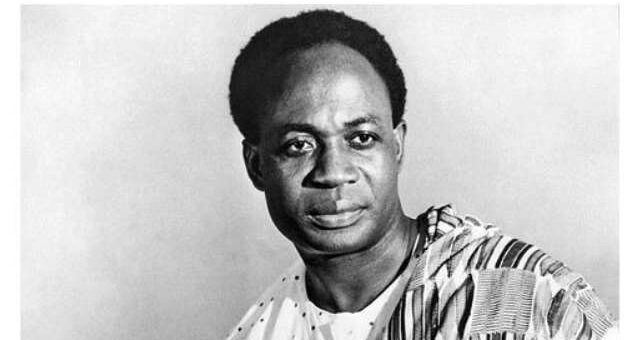
Who is Kwame Nkrumah? On March 6, 1957, in Accra, a city that had spent decades watching British colonial rulers manage what they nicknamed the “Gold Coast,” a 47-year-old former teacher turned political activist addressed a throng too large to count. He told them what no African leader had uttered on African territory since World War II: they were free.
Ghana has recently become the first country in Sub-Saharan Africa to achieve independence from a colonial power. Martin Luther King Jr. and Coretta Scott King were in the audience. Jawaharlal Nehru sent his compliments. The international press had come. And Kwame Nkrumah, who had been imprisoned in Britain only six years before, stood at the center of it all, demonstrating to a continent what was possible.
What makes the Kwame Nkrumah biography so memorable is not just the historical significance of that time, however astonishing it was. The journey’s sheer improbability was responsible for its creation. The son of a goldsmith in a tiny fishing community. A student who has been working various jobs in the United States for ten years. A pamphleteer from London’s anti-colonial groups. A prisoner. A Prime Minister. A President. Finally, an exile deposed while overseas and dying in a Romanian hospital bed in 1972, his ideal of a unified Africa unrealized throughout his lifetime. That journey from Nkroful to Accra to Conakry is one of the most important stories of the twentieth century.
Who is Kwame Nkrumah?
Kwame Nkrumah (born Francis Nwia Kofi Nkrumah on September 21, 1909) was a Ghanaian politician, philosopher, and revolutionary who served as Prime Minister of the Gold Coast from 1952 before becoming Ghana’s first Prime Minister and President in 1957 and 1960, respectively.
He was the first politician to lead a sub-Saharan African nation to independence following World War II, and he was a founding member and primary architect of the Organisation of African Unity (OAU) in 1963. He was a key theorist of Pan-Africanism, the intellectual and political vision of African continental unification, as well as a person who concurrently inspired liberation movements in Rhodesia, South Africa, and the United States civil rights movement.
In 2000, he was named African Man of the Millennium by BBC World Service listeners, who hailed him as a “hero of independence” and an “international symbol of freedom as the leader of the first black African country to shake off the chains of colonial rule.” The recognition came 28 years after his death. But, in many respects, his influence had grown over time.
Early Life
Kwame Nkrumah was born at Nkroful, a tiny town in the Nzema district of the southwestern Gold Coast, which is now Ghana. His father, Kofi Ngonloma, was a jeweler with several marriages and children. His mother, to whom he would remain extremely close throughout his life, was her husband’s third wife and Kwame’s only parent, who formed his early years with deliberate intent and purpose.
It was his mother who pushed him to attend school. That insistence, made against the backdrop of a colonial system that provided Africans with extremely limited educational opportunities, altered the course of not just one person, but a whole continent.
He went to a Catholic mission school in neighboring Half Assini, where he initially loathed the classroom but gradually fell in love with study. By the time he finished primary school, his performance had won him a place as a pupil-teacher, a recognized intermediate level in the colonial educational ladder. In 1926, he was assigned to the Government Training College in Accra, subsequently renamed Achimota College, where he received his teaching credential in 1930.
He taught in many Catholic junior schools along the coast, including Elmina, Axim, and a seminary, before realizing that teaching children was too small a task. The planet itself required instruction.
The Degrees and Ideas
By 1943, Nkrumah had amassed an unusual amount of qualifications for a guy who had begun in a Gold Coast fishing village:
Bachelor of Arts in economics and sociology, Lincoln University, 1939.
Bachelor of Theology, Lincoln University, 1942.
Master of Science in Education—University of Pennsylvania, 1942
Master of Arts in Philosophy—University of Pennsylvania, 1943
He also started (but didn’t finish) a PhD at the University of Pennsylvania.
While studying, he supported himself with a variety of jobs in New York, including labor, soap, and fish sales, and spent his evenings in Harlem, attending lectures, joining political organizations, and immersing himself in the intellectual environment of Black America in the 1930s and 1940s. He read Marcus Garvey, W.E.B. Du Bois, Karl Marx, Friedrich Engels, and the complete range of socialist and Black nationalist thinking available to him. He frequented the Harlem branch of the New York Public Library.
London, Pan-African Congress, and Return Home
Nkrumah left the United States for London in May 1945, with the intention of studying economics and law at the London School of Economics. However, academia continued to succumb to activism.
In London, he got heavily involved in the anti-colonial networks of African and Caribbean students and intellectuals who gathered there. He was appointed secretary-general of the West African National Secretariat and vice president of the West African Students’ Union. Most famously, in 1945, he co-organized the Fifth Pan-African Congress in Manchester with W.E.B. Du Bois, future Kenyan president Jomo Kenyatta, and actor-activist Paul Robeson.
That assembly, which included members from throughout Africa and the African diaspora, advocated independence for African colonies. It was the most grandiose public expression of Pan-African political purpose yet made, with Nkrumah at its helm. Two years later, in 1947, he received an offer to come home.
Return to the Gold Coast
The United Gold Coast Convention (UGCC) is a moderate nationalist party led by J. B. Danquah, who hired Nkrumah as its general secretary in 1947. His enthusiasm and organizational abilities rapidly changed the party’s scope and ambition. But ideological clashes were unavoidable: the UGCC advocated a gradual, elite-led path to independence. Nkrumah desired speedy self-government, popular mobilization, and a mass movement that extended well beyond the educated Ghanaian professional elite.
In 1949, he left the UGCC to form the Convention People’s Party (CPP), Ghana’s first authentically populist political party. Its slogan was straightforward: “Self-Government Now.” Its method was based on Nkrumah’s own “positive action” theory, which included strikes, boycotts, civil disobedience, and widespread peaceful protest against colonial rule.
From Prisoner to Prime Minister
In January 1950, Nkrumah called a countrywide strike. British colonial authorities seized him and imprisoned him for inciting. He served his sentence and won anyhow.
In the Gold Coast’s first general election in February 1951, the CPP won a clear majority. Nkrumah, who is still in jail, scored a resounding victory in the legislative elections. Sir Charles Arden-Clarke, the British colonial governor, had no other choice: he freed Nkrumah from prison and named him Leader of Government Business. In 1952, Nkrumah was appointed Prime Minister of the Gold Coast. The transition from prison to prime minister in under two years remains one of the most stunning individual political reversals in African history.
The Night Everything Changed
Ghana gained independence on March 6, 1957, when the Gold Coast and the former British Togoland trust territory merged to establish a new nation named after the ancient West African kingdom. This was more than simply a national occasion. It was a continental one.
Martin and Coretta King attended the event on Nkrumah’s personal invitation. King later told his Montgomery, Alabama, congregation in a sermon titled “The Birth of a New Nation”: “It reminds us of the fact that a nation or a people can break free from oppression without violence.” He had looked to Nkrumah for inspiration in his own struggle, and what he saw in Accra confirmed his belief that nonviolent action could produce extraordinary change.
US intelligence was less jubilant. According to papers published by the State Department’s Office of the Historian, authorities in Washington concluded that Nkrumah was doing more to harm US interests than any other Black African leader. The Cold War paradigm that governed so much of Western diplomacy in Africa meant that a pan-Africanist who identified with the Non-identified Movement, established links with the Soviet Union and China, and actively backed liberation movements throughout the continent was almost by definition problematic.
Ghana Under Nkrumah
The Kwame Nkrumah biography in government is a narrative of genuine success and true authoritarian slide, and intellectual honesty necessitates both.
Education
He promoted universal free education, constructing hundreds of schools and increasing university enrollment. He convinced Jean Blackwell Hutson of the Schomburg Collection to assist in creating an Africana library at the University of Ghana, demonstrating how seriously he regarded intellectual infrastructure.
Infrastructure
Roads, bridges, and modernized ports were constructed throughout the country.
The Akosombo Dam: His flagship project, one of the world’s largest hydroelectric dams at the time of completion, fueled Ghana’s industrialisation goals and continues to play an important role in the country’s energy generation today.
The Ghana News Agency was established in 1957 and had 8,045 kilometers of domestic telegraph line as well as bureaux in Lagos, Nairobi, London, and New York within a decade.
International diplomacy: In 1958, he held the All-African Peoples Conference in Accra, which brought together leaders from the continent’s liberation movements. He was a founder member and driving force behind the Organisation of African Unity (OAU), which was created in 1963, and before the contemporary African Union.
He co-founded the Non-Aligned Movement with Nehru, Tito, Nasser, and Sukarno in an attempt to build a third route for newly independent nations between American capitalism and Soviet communism. He also invited W.E.B. Du Bois, Kwame Ture (Stokely Carmichael), and other African-Americans to Ghana, viewing the African diaspora as a component of the pan-African enterprise. Du Bois was buried in Accra.
The authoritarian turn
No credible Kwame Nkrumah biography ignores this. Nkrumah’s regime grew more oppressive as economic constraints rose, owing to his ambitious and financially strained industrialization schemes, as well as a slump in cocoa prices.
In 1958, the government legalised incarceration without trial for persons considered a security concern.
In 1960, he declared Ghana a republic, with himself as the president.
In 1961, he named himself the supreme commander of the armed forces and the ultimate leader of the CPP.
He exploited the Preventive Detention Act to detain political opponents, some of whom were held without charges for years. He strengthened control over the courts and media, finally declaring Ghana a one-party state in 1964.
An assassination attempt in 1962 heightened his anxiety and hastened the authoritarian trend.
Britannica accurately summarizes the contradiction: his emphasis on Pan-Africanism was initially popular, but an economic crisis and corruption created the conditions that enabled the 1966 revolution. In his 1972 obituary, the New York Times described him as “a flamboyant spellbinder” who took pride in the term “Osagyefo,” the Akan word for Redeemer, and built a personality cult. Both the mesmerizing and the cult were authentic.
Overthrown While Abroad
On February 24, 1966, when Nkrumah was on an official visit to North Vietnam and China, the Ghanaian military and police attempted a coup with the support of civil service members. They called themselves the National Liberation Council. Nkrumah knew about the coup when he landed in Beijing.
He took sanctuary in Guinea, where President Ahmed Sékou Touré dubbed him honorary co-president of Guinea, a move that revealed all about his popularity throughout Africa. He spent his last years in Conakry writing, theorising Pan-Africanism, and watching events develop on a continent he had helped to shape more than anybody else.
He died on April 27, 1972, in Bucharest, Romania, while getting treatment for prostate cancer. He was sixty-two years old.
His remains were first interred at Nkroful, his hometown. They were then relocated to the Kwame Nkrumah Mausoleum, a huge national monument and park in Accra that is now one of the city’s most popular attractions.
The African Union
The OAU, which he helped establish in 1963, developed into the African Union in 2002, becoming the principal continental body for African political, economic, and social cooperation. Its presence is largely the result of Nkrumah’s vision becoming institutionalized.
Decolonisation: His triumph in 1957 directly inspired and, in many cases, tactically guided African independence movements. Between 1957 and 1966, almost 30 African countries gained independence. Ghana was the proof-of-concept.
Intellectual legacy
His writings, notably Ghana: The Autobiography of Kwame Nkrumah (1957), Africa Must Unite (1963), Consciencism (1964), and Neo-Colonialism: The Last Stage of Imperialism (1965), are still extensively studied in African studies programs across the world.
Ghana’s national memory
In 2009, President John Atta Mills designated September 21 Founders’ Day, the 100th anniversary of Nkrumah’s birth, as an official national holiday.
Pan-African symbolism
He influenced personalities ranging from Marcus Garvey’s intellectual successors to Stokely Carmichael, Bob Marley, and a generation of African leaders who came of age in the 1970s and 1980s, using Ghana’s 1957 independence as their starting point.
Key Timeline
- Born on September 21, 1909, in Nkroful, Gold Coast (now Ghana).
- 1930 — Earns a teacher’s credential at Achimota College in Accra.
- 1935-1943 — Studies in the United States, earning various degrees from Lincoln University and the University of Pennsylvania.
- 1945: Moves to London; co-organizes the Fifth Pan-African Congress in Manchester with Du Bois, Kenyatta, and Robeson.
- 1947 — Returns to Gold Coast and becomes secretary-general of the UGCC.
The Convention People’s Party (CPP) was founded in 1949. - 1950 – Imprisoned by British authorities for inciting.
- 1951 — Released following CPP’s huge victory in the first general election; becomes Leader of Government Business.
- 1952—Becomes Prime Minister of the Gold Coast.
- March 6, 1957 — Ghana gains independence; Martin Luther King Jr. attends the celebration.
- 1960 — Ghana elects its first republican president.
- 1961 — Nationalises the cocoa trade and declares himself supreme commander of the armed forces.
- In 1962, the Soviet Union awarded him the Lenin Peace Prize; he survived an assassination attempt.
- 1963 — Co-founds the Organization of African Unity (OAU) in Addis Ababa.
- 1964 — Declares Ghana a one-party state
- February 24, 1966 — Overthrown in a military coup while on an official visit to China.
- 1966-1972: Lives in exile in Conakry, Guinea; designated honorary co-president by Sékou Touré; continues to write and theorize.
- April 27, 1972 — Died in Bucharest, Romania, of prostate cancer at the age of 62.
- 2000 – Voted African Man of the Millennium by BBC World Service listeners.
- 2009: Ghana designates September 21 as Founders’ Day, a national holiday.
FAQs for Kwame Nkrumah
Q1. Who is Kwame Nkrumah? Kwame Nkrumah (September 21, 1909 – April 27, 1972) was a Ghanaian politician, philosopher, and Pan-Africanist who served as Ghana’s first prime minister and president. He led the Gold Coast to independence from Britain in 1957, becoming the first Sub-Saharan African country to do so, and was a founding member of the Organisation of African Unity in 1963.
Q2: What was Kwame Nkrumah famous for? He is most known for guiding Ghana to independence in 1957, co-founding the Organisation of African Unification, advocating Pan-African unification, and being the most prominent theorist and practitioner of anticolonial politics in postwar Africa. In 2000, BBC World Service listeners elected him the African Man of the Millennium.
Q3: What was Kwame Nkrumah’s philosophy? Nkrumah established a political theory known as “Consciencism” — a blend of African traditional values, Islamic influence in parts of Africa, and European philosophical heritage aimed at African independence and unification. He was also a socialist who felt that genuine independence for African states could only be achieved by economic self-determination rather than political sovereignty.
Q4: How did Kwame Nkrumah rise to power? In 1949, he formed the Convention People’s Party (CPP) after leaving the moderate UGCC. His “positive action” campaign, which included nonviolent mass strikes and civil disobedience, landed him in prison in 1950. When the CPP won the 1951 general election by a landslide, he was freed from prison and named Leader of Government Business by the British ruler, eventually becoming Prime Minister in 1952. Ghana gained independence in 1957, with Nkrumah as its first prime minister.
Q5: How was Kwame Nkrumah overthrown? On February 24, 1966, when Nkrumah was on an official visit to North Vietnam and China, the Ghanaian military and police launched a coup and established the National Liberation Council. Nkrumah was not in the nation and never returned, instead fleeing into exile in Guinea. His dismissal was largely due to economic ineptitude, corruption, and his increasingly autocratic rule.
Q6. What is the link between Kwame Nkrumah and Martin Luther King Jr.? Martin Luther King Jr. and Coretta Scott King went to Ghana’s independence celebration on March 6, 1957, at Nkrumah’s invitation. King was tremendously impressed by Nkrumah’s nonviolent leadership, and he used Ghana’s independence in several sermons and speeches to demonstrate that oppressed peoples might achieve freedom without bloodshed. The two guys had meals and communicated about their similar hardships.
Conclusion
The Kwame Nkrumah biography does not stop with the coup of 1966. In a significant way, it has not ended at all.
The African Union, the continental entity he envisioned and pushed for, still exists and works today, although imperfectly but effectively. He pioneered the philosophical legacy of Pan-Africanism, which continues to fuel discussions concerning African political economy, reparations, and continental integration. He created the Akosombo Dam, which continues to power millions of Ghanaian households today. The university he established continues to teach students who have never heard him speak but are living in part of the future he foresaw.
He was faulty. His dictatorship has actual consequences for people. However, the EBSCO Research Starters summary correctly states that he was “a visionary who led a nation and influenced a continent toward independence.” These two statements are not contradictory. They are the same reality, viewed from several perspectives.
Was this biography worth your time? Share it with someone who is studying African political history or thinking about Pan-Africanism now, and leave a comment on which part of Nkrumah’s legacy you believe is most relevant to Africa’s issues in the twenty-first century.

 Glen
Glen