 Glen
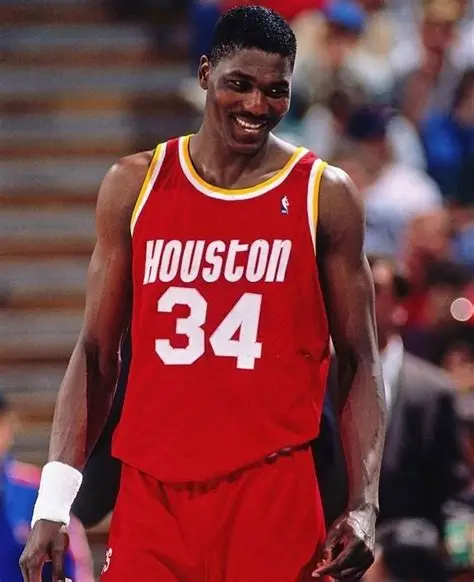
GlenHakeem Abdul Olajuwon was born on January 21, 1963, in Lagos, Nigeria. He holds Nigerian and American nationality. Known as “The Dream,” Olajuwon became one of the greatest centers in basketball history through his skill, footwork, and dominance on both ends of the court. He led the Houston Rockets to back-to-back NBA championships in 1994 and 1995 while earning numerous individual honors. His journey from playing soccer as a child in Nigeria to NBA stardom highlights determination, adaptability, and hard work.
Olajuwon combined athletic grace with a strong defensive presence and a signature move called the Dream Shake. He retired as the NBA’s all-time leader in blocks and ranks among the elite in points, rebounds, and steals. Beyond statistics, his influence extends to his faith, business ventures, and role as a mentor. His story inspires many as an example of success through discipline and continuous improvement.
Hakeem Olajuwon Early Life
Hakeem Abdul Olajuwon grew up in Lagos, Nigeria, as the third of eight children in a Yoruba family. His parents, Salim and Abike Olajuwon, owned a cement business and provided a stable, working-class environment. They emphasized hard work, honesty, respect for elders, and self-belief. These values shaped Olajuwon’s character throughout his life.
As a child, Olajuwon played soccer as a goalkeeper, which developed his agility, quick reflexes, and positioning skills. He also participated in handball and other sports at Muslim Teachers College in Lagos. Basketball entered his life around age 15 or 16 during a local tournament. Coaches noticed his height and potential despite his limited experience with the sport. Nigeria offered a rich cultural backdrop, and Olajuwon has spoken positively about his upbringing, rejecting portrayals of it as underdeveloped. Lagos, a bustling coastal city and economic hub in Lagos State, exposed him to diverse influences that built resilience.
His parents supported education and discipline. Olajuwon balanced school with sports. By his late teens, basketball became his focus. A recommendation led him to consider opportunities abroad. In 1980, he traveled to the United States, initially facing culture shock in New York before heading to Houston. This move marked the start of his American journey while he remained connected to his Nigerian roots and Muslim faith.
Olajuwon’s early experiences in Nigeria built a foundation of versatility. Soccer footwork later translated to his post moves. Family values kept him grounded amid future fame and wealth. He often credits these formative years for his work ethic and humility.
Hakeem Olajuwon Education
Olajuwon attended Muslim Teachers College in Lagos for high school. There he first played organized basketball. The school provided structure, and sports helped channel his energy. Academic expectations reinforced the importance of learning alongside athletics.
In 1980, Olajuwon enrolled at the University of Houston on a basketball scholarship. He redshirted his first year to adjust to American college life, gain strength, and learn basketball fundamentals. He majored in business-related studies while focusing on physical education interests. Higher education remained a priority, reflecting his parents’ emphasis on knowledge as a path to success.
At the University of Houston, Olajuwon worked with coach Guy Lewis and improved rapidly. He trained with NBA players like Moses Malone during summers, which accelerated his development. College life exposed him to new training methods, team dynamics, and academic demands. He balanced classes with intense practice. His time at Houston helped him mature both as a player and a person.
Olajuwon valued his university experience. It offered more than basketball skills. It taught discipline, teamwork, and adaptation to a new culture. He maintained ties to his faith and Nigerian heritage while embracing opportunities in the United States. This period laid groundwork for professional success and lifelong learning.
Hakeem Olajuwon College Career
Olajuwon joined the Houston Cougars and became a key player. In his redshirt freshman season of 1981-82, he came off the bench as the sixth man. He averaged solid numbers and contributed to a Final Four appearance. The team, known as Phi Slama Jama for its dunking style, featured players like Clyde Drexler.
The following seasons saw Olajuwon take a leading role. In 1982-83, he helped Houston reach the NCAA championship game, where they lost to North Carolina. Olajuwon earned recognition as Final Four Most Outstanding Player. His rebounding, shot-blocking, and scoring improved each year. By 1983-84, he led the nation in rebounding and earned consensus All-American honors along with Southwest Conference Player of the Year.
Olajuwon’s college statistics highlighted his dominance. He posted high field-goal percentages, strong rebounding averages, and impressive blocks. Three Final Four trips showcased his impact in big games. His footwork and timing stood out even against experienced opponents. Coaches and scouts praised his potential despite starting basketball late.
College competition refined his game. Olajuwon learned to handle physical play, read defenses, and lead teammates. His partnership with Drexler created exciting, high-flying basketball. These years built confidence and prepared him for the NBA. The University of Houston retired his number 34 in recognition of his contributions.
Hakeem Olajuwon NBA Draft and Early Professional Years
The 1984 NBA draft was historic, featuring talents like Michael Jordan and Charles Barkley. The Houston Rockets selected Olajuwon first overall. This choice aligned with his college success in the same city. He joined the Rockets for the 1984-85 season and made an immediate impact.
In his rookie year, Olajuwon averaged over 20 points, nearly 12 rebounds, and more than 2.5 blocks per game. He earned NBA All-Rookie First Team honors and finished second in Rookie of the Year voting. His presence transformed the Rockets’ frontcourt. Fans and media quickly recognized his potential as a franchise cornerstone.
Olajuwon formed a strong duo with Ralph Sampson, known as the Twin Towers. In 1985-86, they led Houston to the NBA Finals against the Boston Celtics. Though the Rockets lost, Olajuwon gained valuable playoff experience. His scoring and defensive stats continued to rise. He developed consistency and work ethic that defined his career.
Early challenges included adjusting to the NBA’s physicality and travel schedule. Olajuwon improved his conditioning and studied opponents. These seasons established him as an elite center. His performance earned All-Star selections and All-NBA honors.
Hakeem Olajuwon Rise to Stardom and Peak Seasons
Throughout the late 1980s and early 1990s, Olajuwon refined his skills. He led the league in rebounding twice and blocks three times. His Dream Shake move, involving fakes and spins, became nearly unstoppable. Defenders struggled to contain his footwork and quickness.
Olajuwon earned multiple All-NBA First Team selections and All-Defensive honors. In the 1992-93 season, he won Defensive Player of the Year. The next year, 1993-94, marked his pinnacle. He won NBA MVP, Defensive Player of the Year, and led the Rockets to the championship. He also earned Finals MVP. This sweep of major awards in one season was historic.
In 1994-95, Olajuwon led Houston to another title, defeating the Orlando Magic in the Finals. His performance against Shaquille O’Neal highlighted his versatility and experience. Back-to-back championships solidified his legacy. He averaged strong numbers in playoffs, often elevating his game under pressure.
Injuries and team changes tested him at times, but Olajuwon remained durable and dedicated. His leadership helped younger players. He embraced his role as a veteran anchor. These peak years showcased his all-around excellence on offense and defense.
Hakeem Olajuwon Later NBA Career and Transition
As the 1990s progressed, Olajuwon continued producing at a high level despite age. He maintained All-Star appearances and strong defensive metrics. The Rockets remained competitive, though they did not repeat as champions. Olajuwon adapted his game to stay effective with less athleticism.
In 2001, he was traded to the Toronto Raptors for his final season. This move allowed him to play alongside younger stars like Vince Carter. Olajuwon contributed mentorship and veteran presence. He played 61 games and helped the team in the playoffs before retiring in 2002.
His career totals include over 26,000 points, nearly 14,000 rebounds, and a record 3,830 blocks. Olajuwon ranks high in multiple categories and recorded quadruple-doubles. These achievements reflect longevity and consistency across 18 seasons.
Hakeem Olajuwon Awards and Honors
Olajuwon received many accolades. He won two NBA championships and two Finals MVP awards. In addition, he earned NBA MVP in 1994 and two Defensive Player of the Year honors. He appeared in 12 All-Star games and earned six All-NBA First Team selections.
Additional honors include multiple All-Defensive Team selections, rebounding and blocks titles, and All-Rookie recognition. The Houston Rockets retired his number 34. He was named to the NBA’s 50th and 75th Anniversary Teams. In 2008, he entered the Naismith Memorial Basketball Hall of Fame. The FIBA Hall of Fame inducted him in 2016.
Olajuwon also won Olympic gold with the United States in 1996. These awards recognize his dominance, skill, and impact on basketball.
Hakeem Olajuwon Personal Life
Olajuwon married Dalia Asafi in 1996 in Houston. They have children, including daughters Rahmah and Aisha, and sons Abdullah and Abdul. He has an older daughter, Abisola, from a previous relationship. Family remains central to his life.
Olajuwon deepened his Muslim faith during his career. He observed Ramadan and found strength in prayer. His beliefs influenced his discipline and perspective. He became a U.S. citizen in 1993 while maintaining Nigerian ties.
After retirement, Olajuwon engaged in real estate and business. He built a successful portfolio through smart investments. He also mentored young players and participated in basketball clinics. His post-career life reflects balance between family, faith, and entrepreneurship.
Read More: Alicia Kanini Biography, Age, Net Worth, Education, Husband and Family Background
Hakeem Olajuwon Legacy and Impact
Olajuwon’s style influenced many big men. His footwork and defensive instincts set standards for centers. He proved players from outside the United States could dominate the NBA. His success opened doors for international talent.
In Houston, Olajuwon remains a beloved figure. The city honors him with statues and tributes. His story inspires athletes worldwide, especially those from Africa. He demonstrated that late starts in a sport do not limit potential with dedication.
Olajuwon advocated for education and community values. His life shows the power of combining talent with character. Future generations study his games for technique and mindset.
Conclusion
Hakeem Olajuwon rose from Lagos, Nigeria, to basketball immortality through talent, effort, and principles. His championships, records, and honors mark an extraordinary career. Beyond the court, his faith, family, and business pursuits complete a well-rounded life. Olajuwon’s journey continues to motivate fans and players globally.
FAQs
What is Hakeem Olajuwon’s date of birth and place of birth?
Hakeem Olajuwon was born on January 21, 1963, in Lagos, Nigeria.
Which NBA teams did Hakeem Olajuwon play for?
Hakeem Olajuwon played primarily for the Houston Rockets from 1984 to 2001 and finished his career with the Toronto Raptors in 2001-2002.
How many NBA championships did Hakeem Olajuwon win?
Hakeem Olajuwon won two NBA championships with the Houston Rockets in 1994 and 1995.
What is Hakeem Olajuwon’s most famous move?
Hakeem Olajuwon’s most famous move is the Dream Shake, a series of fakes and spins in the post that confused defenders.
When was Hakeem Olajuwon inducted into the Basketball Hall of Fame?
Hakeem Olajuwon was inducted into the Naismith Memorial Basketball Hall of Fame in 2008.
How many children does Hakeem Olajuwon have?
Hakeem Olajuwon has several children, including daughters Rahmah, Aisha, and Abisola, and sons Abdullah and Abdul.
Did Hakeem Olajuwon win any Olympic medals?
Yes, Hakeem Olajuwon won a gold medal with the United States at the 1996 Atlanta Olympics.

 Glen
Glen